The international system in the early months of 2026 appears increasingly unsettled, with multiple conflicts unfolding simultaneously across...

Vous n'êtes pas connecté
- English
- Français
- عربي
- Español
- Deutsch
- Português
- русский язык
- Català
- Italiano
- Nederlands, Vlaams
- Norsk
- فارسی
- বাংলা
- اردو
- Azərbaycan dili
- Bahasa Indonesia
- Հայերեն
- Ελληνικά
- Bosanski jezik
- українська мова
- Íslenska
- Türkmen, Түркмен
- Türkçe
- Shqip
- Eesti keel
- magyar
- Қазақ тілі
- Kalaallisut ; kalaallit oqaasii
- Lietuvių kalba
- Latviešu valoda
- македонски јазик
- Монгол
- Bahasa Melayu ; بهاس ملايو
- ဗမာစာ
- Slovenščina
- тоҷикӣ ; toğikī ; تاجیکی
- ไทย
- O'zbek ; Ўзбек ; أۇزبېك
- Tiếng Việt
- ភាសាខ្មែរ
- རྫོང་ཁ
- Soomaaliga ; af Soomaali
Rubriques :
 Maroc - EURASIAREVIEW.COM - A la une - 22/Mar 00:40
America’s Security Umbrella: From Shield To Snare – OpEd
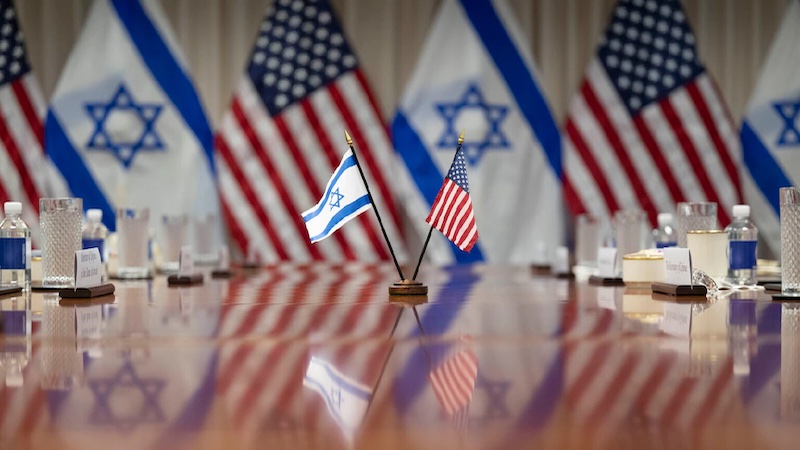
Washington's unconditional backing of Israel has transformed a deterrence architecture into a mechanism for perpetual conflict—and America is paying the price. For decades, the United States has projected itself as the guarantor of security in the Middle East—a stabilizing force under whose umbrella allies could shelter. That umbrella, once seen as a shield, now looks increasingly like a snare. Israel's reliance on war as a default strategy, coupled with Washington's unconditional backing, has dragged America into a quagmire that is reshaping the region in irreversible ways. THE PROMISE OF DETERRENCE The U.S. security umbrella was born out of Cold War logic. Washington's commitment to Israel and other allies was meant to deter Soviet influence, reassure partners, and prevent regional wars from spiraling into global conflict. Military aid, intelligence sharing, and diplomatic cover were the tools of this umbrella. For Israel, the arrangement guaranteed survival in a hostile neighborhood. For America, it promised influence and stability. Yet deterrence has given way to escalation. Israel's misjudgment of threat perceptions—treating every adversary as an existential menace—has proven disastrous. Each military campaign, justified as defense, has instead deepened insecurity, alienated Arab partners, and emboldened Iran and its proxies. America, by underwriting these wars, finds itself complicit in a strategy that erodes rather than enhances regional security. "Deterrence, uncoupled from restraint, is not a shield. It is permission." THE QUAGMIRE EFFECT The parallels with past U.S. entanglements are striking. In Vietnam, Afghanistan, and Iraq, Washington discovered that military superiority does not translate into political victory. In the Middle East today, America is again ensnared. Its support for Israel's campaigns has tied its credibility to outcomes it cannot control. The quagmire effect is twofold. First, U.S. resources—military, diplomatic, and economic—are drained by commitments that yield diminishing returns. Second, America's global standing suffers. By shielding Israel from international censure, Washington undermines its moral authority. By supplying advanced weaponry, it fuels an arms race that destabilizes the region. And by aligning itself so closely with Israel's war footing, it alienates Arab states whose cooperation is vital for broader strategic goals. THE COLLAPSE OF CREDIBILITY Credibility is the currency of great powers. Once lost, it is difficult to regain. Washington's credibility has been eroded not only in the Middle East but globally. Allies in Europe and Asia watch America's entanglement with unease, questioning whether U.S. commitments elsewhere are equally vulnerable to being hijacked by local conflicts. Diplomatic cover for Israel has weakened America's moral authority in institutions like the United Nations. Military aid, intended to preserve Israel's qualitative edge, has instead fueled instability. And America's strategic relevance—once unquestioned—is increasingly seen as damaging, reactive, and overstretched. "Allies in Europe and Asia no longer ask whether America will show up. They ask whether showing up makes things worse." A MULTIPOLAR MIDDLE EAST The Middle East is no longer a theater of American dominance. It is a proving ground for multipolarity. Russia, China, and regional actors such as Turkey and Iran are carving out influence at America's expense. Moscow leverages its military presence in Syria to project power. Beijing deepens economic ties through its Belt and Road Initiative. Iran, emboldened by America's entanglement, expands its network of proxies. In this multipolar order, America's security umbrella is less a deterrent than a liability. Its presence guarantees not peace but perpetual instability. The umbrella, once a symbol of protection, now casts a shadow of entrapment. ISRAEL'S RELIANCE ON WAR Israel's reliance on war as a security strategy is central to this dynamic. From Lebanon to Gaza, military campaigns have become the default response to threats. Yet these campaigns have failed to deliver lasting security. Instead, they have hardened resistance, deepened humanitarian crises, and isolated Israel diplomatically. America's unconditional support has enabled this reliance. By providing military aid and diplomatic cover, Washington has allowed Israel to pursue strategies that perpetuate conflict. The result is a vicious cycle: Israeli campaigns provoke regional backlash, America defends Israel, and the region descends further into instability. "Washington did not choose this war. But its blank check made the choice for someone else." THE DEFINING MOMENT This is the defining moment in the annals of war: the collapse of the U.S. security umbrella as a stabilizing force. What was meant to deter conflict has become a mechanism for perpetuating it.
Articles similaires

At The Edge Of A Fractured World Order – OpEd
eurasiareview.com - 22/Mar 00:45
The international system in the early months of 2026 appears increasingly unsettled, with multiple conflicts unfolding simultaneously across...

The single move that will bring Trump's plans crashing down
rawstory.com - 16/Mar 09:30
The drumbeats for expanding our (and Israel’s) war with Iran are loud.Cable news panels talk about strategy. Politicians talk about deterrence....
The single move that will bring Trump's plans crashing down
rawstory.com - 16/Mar 09:30
The drumbeats for expanding our (and Israel’s) war with Iran are loud.Cable news panels talk about strategy. Politicians talk about deterrence....

The Mirage Of Decisive Force – Analysis
eurasiareview.com - 22/Mar 01:52
How the U.S.-Israel Campaign Against Iran Rewrote the Rules of Modern War It began with the thunder of massed sorties and the silence of...
The Mirage Of Decisive Force – Analysis
eurasiareview.com - 22/Mar 01:52
How the U.S.-Israel Campaign Against Iran Rewrote the Rules of Modern War It began with the thunder of massed sorties and the silence of...

MAGA national security expert makes damning prediction about US 'losing the war'
rawstory.com - 15/Mar 16:00
David Pyne, a prominent America First conservative and national security analyst, issued a stark warning about the trajectory of the Iran war, arguing...
Brute Force Prevails The Global Order – OpEd
eurasiareview.com - 22/Mar 01:02
Wars no longer announce themselves with official proclamations. They creep forward, strike by strike, each retaliation erasing another line once...
Brute Force Prevails The Global Order – OpEd
eurasiareview.com - 22/Mar 01:02
Wars no longer announce themselves with official proclamations. They creep forward, strike by strike, each retaliation erasing another line once...

The War Against Iran: Does It Mark The Beginning Of A New Middle East? – Analysis
eurasiareview.com - 22/Mar 01:54
Introduction On February 28, 2026, in a joint military operation, the United States and Israel bombed several major cities in Iran. The Israeli...
Les derniers communiqués
-
Boeing and Sun PhuQuoc Airways Announce Order for Up to 40 787 Dreamliner Jets
Boeing - 18/02/2026
-
Vietnam Airlines Finalizes Order for 50 Boeing 737 MAX Airplanes
Boeing - 18/02/2026
-
Air Astana Finalizes Order For Up to 15 Boeing 787 Dreamliner Jets
Boeing - 17/02/2026
-
McDonald’s Canada Reimagines Breakfast with the New Breakfast Poutine in Atlantic Canada
MC DONALD'S - 17/02/2026
-
Statement on Starliner Crewed Flight Test Investigation Report
Boeing - 17/02/2026
-
Meta begins construction of $10-billion data centre in Indiana
Meta - 12/02/2026
-
Last 787-8 test airplane bows out after years of breakthroughs
Boeing - 10/02/2026
-
Boeing Flight Deck Modernization Keeps C-17A Mission Ready
Boeing - 09/02/2026
-
ANA receives Boeing’s 100th 787 Landing Gear Exchange Delivery
Boeing - 04/02/2026
-
Boeing announces largest-ever Landing Gear Exchange agreement at Singapore Airshow
Boeing - 04/02/2026