(UCA News) -- There is a sound that belongs to childhood. You never think to notice it until it has gone — laughter spilling out of a schoolyard,...

Vous n'êtes pas connecté
- English
- Français
- عربي
- Español
- Deutsch
- Português
- русский язык
- Català
- Italiano
- Nederlands, Vlaams
- Norsk
- فارسی
- বাংলা
- اردو
- Azərbaycan dili
- Bahasa Indonesia
- Հայերեն
- Ελληνικά
- Bosanski jezik
- українська мова
- Íslenska
- Türkmen, Түркмен
- Türkçe
- Shqip
- Eesti keel
- magyar
- Қазақ тілі
- Kalaallisut ; kalaallit oqaasii
- Lietuvių kalba
- Latviešu valoda
- македонски јазик
- Монгол
- Bahasa Melayu ; بهاس ملايو
- ဗမာစာ
- Slovenščina
- тоҷикӣ ; toğikī ; تاجیکی
- ไทย
- O'zbek ; Ўзбек ; أۇزبېك
- Tiếng Việt
- ភាសាខ្មែរ
- རྫོང་ཁ
- Soomaaliga ; af Soomaali
Rubriques :
 Maroc - EURASIAREVIEW.COM - A la une - 30/Mar 15:11
Nobody Told Us This Would Happen – OpEd
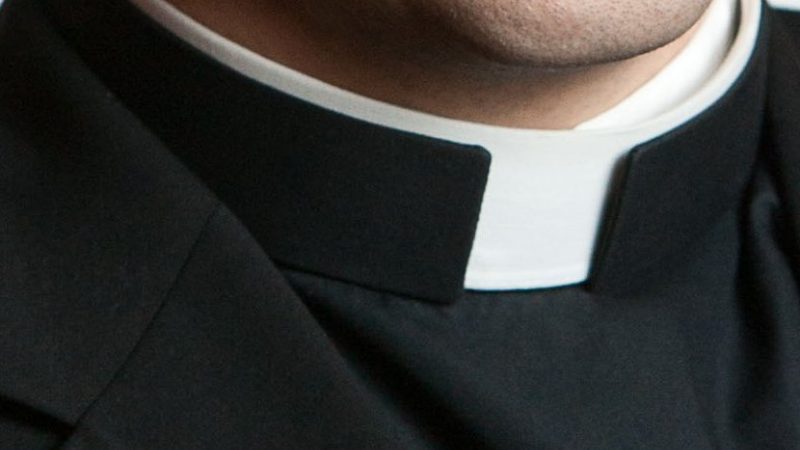
I want to tell you something that took me an embarrassingly long time to admit, even to myself. There have been mornings, more than a few, when I have stood at the altar on Easter Sunday, incense rising, the Exsultet still faintly echoing in the stone, the congregation watching, and felt almost nothing. No doubt exactly what it should be. Something quieter and harder to name. A kind of interior distance from the very thing I was proclaiming with my whole body. The vestments, the candles, and the Alleluia returned after forty days of silence, all of it beautiful, all of it real, and somewhere behind my eyes, a man standing very still, watching himself perform a conviction he could not, in that moment, fully feel. Nobody told me that would happen. Nobody in formation said: there will be Easters where you hold the faith more than it holds you, and that is not a sign that you have failed. It is a sign that you are human and that the resurrection is not a feeling. I think that silence has cost us something. Because religious men and women are carrying this more than we say. And the weight of it, the gap between public proclamation and private experience, can quietly hollow a vocation from the inside if it goes unnamed long enough. So I am naming it. Because the empty tomb, of all places, is where honesty belongs. Tuesday Is the Real Test The alarm goes off at five-fifteen. There is the Office to pray, the same psalms you have prayed ten thousand times, some of which still catch you off guard and some of which you now recite from a place so far behind your conscious mind that you could not later tell anyone what you prayed. There is the brother at breakfast who chews with his mouth open and has done so for eleven years and will, God willing, continue to do so for eleven more. There is the meeting that should take forty minutes and will take two hours. There is the retreatant in genuine crisis. There is the email from the provincial that requires a careful reply. There is, by three in the afternoon, a tiredness that is not quite physical. And somewhere in the background of all of it, like a frequency you have learned to live with, is the question: is any of this actually true? I do not mean that as a crisis. I mean it as the texture of a faithful life. The resurrection was never going to feel the same on a Tuesday in February as it does at the Easter Vigil. The disciples behind the locked doors in Jerusalem were not in a spiritual high. They were exhausted and frightened and had no particular reason to expect what happened next. The risen Christ did not wait for them to be ready. He came through the locks. That is the only version of resurrection faith that actually holds up under the weight of a vocation. Not the one that depends on feeling. The one that keeps showing up even when the feeling is nowhere to be found. What the Scandals Actually Did to Us I want to be honest about something else, and this one is harder. When the abuse scandals broke, not as a news story about somewhere else but as a reality inside communities we knew, congregations we belonged to, men we had eaten with and prayed with and respected, something happened to many of us that we have not fully processed. A particular kind of grief that has no clean outlet. Because we love the Church. We gave our lives to it. And it has done things that cannot be defended and has sometimes hidden behind the very language of resurrection and grace to avoid accountability. The temptation, I have felt it, I suspect you have too, is to manage that pain quietly. To absorb it privately and keep functioning publicly. To protect what you love by not looking too hard at what it has done. The empty tomb will not allow that. Not finally. Because the resurrection is not the Church’s achievement. It is the event that called the Church into being and sits in permanent judgement over it. The same power that raised Jesus from the dead has absolutely no interest in institutional reputation. It has a relentless and deeply inconvenient interest in truth. In the body. I am the one who was harmed and not protected. Religious men and women are not called to be institutional defenders. We are called to be witnesses to a risen Christ who appeared first to the people the institution had failed, the women, the grieving, the ones who had nowhere left to go. If that costs us something inside our own structures, it is a much smaller cost than the one already paid by people we were supposed to protect. The Vocations We Actually Took Let me say something about the vows that sometimes get lost under the weight of canon law and community custom. When you made a permanent profession, you did not sign a contract with the Church. You made a wager with God. A wager that love poured out without return is not wasted. That the grain of wheat falling into the ground and disappearing actually does bear fruit, even when you will not live to see it. That death, of ego, of preference, of the life you might otherwise have had, is not the final word. That is what you staked your life on. Not a career. Not a community that would always be healthy and wise and worthy of you. Not an institution that would never disappoint you. A resurrection. Which means that when the community is difficult, and it will be, as it is and has been, that is not a sign that you chose wrong. It may be exactly where the wager is being tested most honestly. The brother you find impossible to love is not an obstacle to your vocation. He may be closer to the centre of it than the retreats and the ministry and the moments when religious life feels like exactly what it should be. I have had to learn this slowly. I am still learning it. The Specific Dangers of Living Here There are temptations particular to this life that deserve to be named plainly between people who actually live it. The first is what I can only call the professionalisation of the soul. When prayer is your job, when the language of faith is the water you swim in, when you have given hundreds of homilies on the resurrection, there comes a risk that you begin to relate to it as subject matter rather than ground. You know it the way a musicologist knows a symphony, with great precision and at a slight distance. The empty tomb becomes something you explain. The danger is that you stop standing inside it. The second is subtler and in some ways more dangerous. It is the slow substitution of community belonging for personal conversion. Religious life gives you structure, purpose, identity, and people who will show up when you are sick and pray when you die. These are genuine gifts. They can also become a replacement for the harder interior work of ongoing transformation. A community can be warm and functional and genuinely loving and still have quietly stopped asking whether it reflects anything of the risen life it exists to proclaim. The question worth asking, not once in a chapter but regularly, personally, is whether you are different because of this life. Not more educated, not more practised in ministry. Actually different. Freer. More capable of love than you were ten years ago. If the answer is uncertain, that is worth sitting with rather than managing. What the Tomb Is Still Saying The resurrection does not ask for your performance. It does not need your certainty. It does not require that you resolve the gap between what you proclaim publicly and what you feel privately, because that gap is not a failure of faith, it is its most honest address. What it asks is simpler and harder than any of that. It asks that you keep showing up. To the office at five-fifteen. To the brother who chews with his mouth open. To the chapter meeting and the difficult conversation and the retreatant in crisis and the email from the provincial. To the altar on Easter Sunday when the incense is rising and the Alleluia is returning, and somewhere behind your eyes a man is standing very still. Keep showing up. Not because it always feels true. Because you have staked your life on the possibility that it is. And because the tomb is empty, and you have seen enough, in small moments, in unexpected places, in people transformed by something you cannot fully explain, to know that this, despite everything, is not nothing. That is enough. On most days, it is more than enough. This article was published at LiCAS.news.
Articles similaires
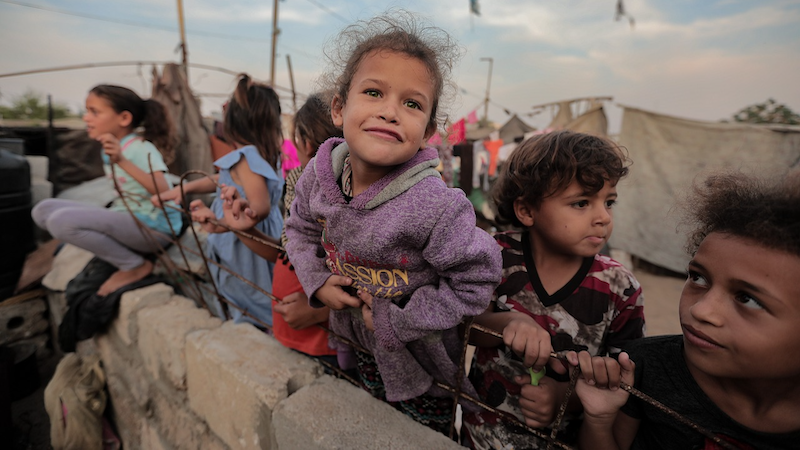
Every Child Deserves A Peaceful Childhood – OpEd
eurasiareview.com - 22/Mar 00:37
(UCA News) -- There is a sound that belongs to childhood. You never think to notice it until it has gone — laughter spilling out of a schoolyard,...

When War Becomes Content, We Feel Before We Understand – OpEd
eurasiareview.com - 30/Mar 15:28
Today's war rhetoric is often dismissed as "childish," likened to video games and online bravado. But the issue is not immaturity—it is adaptation....
Fellow Ghanaians: The hospitals we have to be ashamed of
myjoyonline.com - 24/Mar 16:24
Fellow Ghanaians, there is a particular kind of cruelty in being sick. You are already vulnerable, already frightened, already at the mercy of a body...

The Great Canadian Dream Of Homeownership Isn’t Dead, But It Is Evolving
storeys.com - 20/Mar 14:33
For years, the obituary for the “Great Canadian Dream” of homeownership has been written in steep market prices and interest rate hikes. But...
The Great Canadian Dream Of Homeownership Isn’t Dead, But It Is Evolving
storeys.com - 20/Mar 14:33
For years, the obituary for the “Great Canadian Dream” of homeownership has been written in steep market prices and interest rate hikes. But...
6 Dishes To Cook When You’re Low on Appetite and Energy
bahrain-confidential.com - 20/Mar 03:00
We have all been there. The news is constant, you are running on empty, and the last thing you want to think about is what to cook. “What’s for...

Trumpism is an abomination — and science proves it
rawstory.com - 22/Mar 14:41
FCC Chairman and apparent Goebbels fanboy Brendan Carr is suggesting the radio and TV broadcasters he regulates should begin airing more...
Trumpism is an abomination — and science proves it
rawstory.com - 22/Mar 14:41
FCC Chairman and apparent Goebbels fanboy Brendan Carr is suggesting the radio and TV broadcasters he regulates should begin airing more...

Special Report: Recognition, Inclusion and Reform — The Deeper Message in Adeniyi’s Tribute to Women Officers
spyetv.com.ng - 30/Mar 07:33
In a rare departure from the rigid routines of a paramilitary institution, the Comptroller-General of Customs, Adewale Adeniyi, on Friday, March 27,...
Les derniers communiqués
-
Boeing and Department of War Sign 7-Year Framework to Expand PAC-3 Seeker Production
Boeing - 01/04/2026
-
Boeing and Department of War Sign 7-Year Framework to Expand PAC-3 Seeker Production
Boeing - 01/04/2026
-
Boeing to Release First Quarter Results on April 22
Boeing - 31/03/2026
-
Vietnam Airlines Finalizes Order for 50 Boeing 737 MAX Airplanes
Boeing - 18/02/2026
-
Boeing and Sun PhuQuoc Airways Announce Order for Up to 40 787 Dreamliner Jets
Boeing - 18/02/2026
-
McDonald’s Canada Reimagines Breakfast with the New Breakfast Poutine in Atlantic Canada
MC DONALD'S - 17/02/2026
-
Air Astana Finalizes Order For Up to 15 Boeing 787 Dreamliner Jets
Boeing - 17/02/2026
-
Statement on Starliner Crewed Flight Test Investigation Report
Boeing - 17/02/2026
-
Meta begins construction of $10-billion data centre in Indiana
Meta - 12/02/2026
-
Last 787-8 test airplane bows out after years of breakthroughs
Boeing - 10/02/2026