Amid escalating tensions over the Taiwan issue following Japanese Prime Minister Sanae Takaichi’s Taiwan contingency remarks on 7 November 2025 and...

Vous n'êtes pas connecté
- English
- Français
- عربي
- Español
- Deutsch
- Português
- русский язык
- Català
- Italiano
- Nederlands, Vlaams
- Norsk
- فارسی
- বাংলা
- اردو
- Azərbaycan dili
- Bahasa Indonesia
- Հայերեն
- Ελληνικά
- Bosanski jezik
- українська мова
- Íslenska
- Türkmen, Түркмен
- Türkçe
- Shqip
- Eesti keel
- magyar
- Қазақ тілі
- Kalaallisut ; kalaallit oqaasii
- Lietuvių kalba
- Latviešu valoda
- македонски јазик
- Монгол
- Bahasa Melayu ; بهاس ملايو
- ဗမာစာ
- Slovenščina
- тоҷикӣ ; toğikī ; تاجیکی
- ไทย
- O'zbek ; Ўзбек ; أۇزبېك
- Tiếng Việt
- ភាសាខ្មែរ
- རྫོང་ཁ
- Soomaaliga ; af Soomaali
Rubriques :
 Maroc - EURASIAREVIEW.COM - A la une - Aujourd'hui 00:32
The Taiwan Imbroglio Too Upsetting And Worrying – Analysis
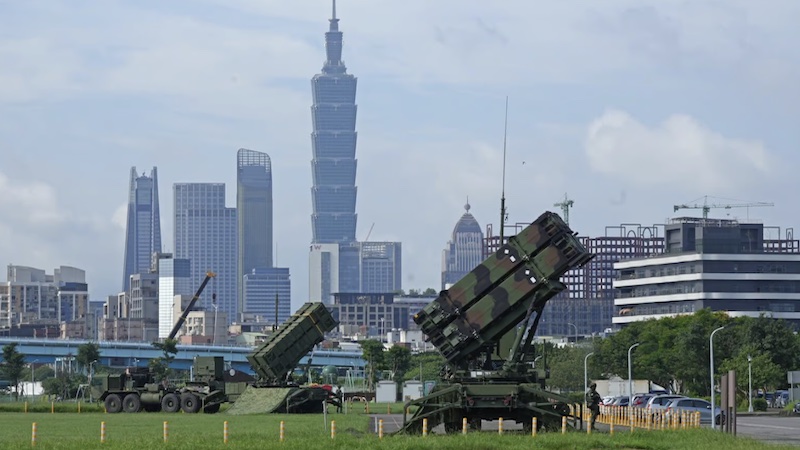
Amid escalating tensions over the Taiwan issue following Japanese Prime Minister Sanae Takaichi’s Taiwan contingency remarks on 7 November 2025 and the sharp reactions from China that considers the island nation its own territory, Taiwan’s perceptions of an existential threat has suddenly heightened. Though a possible Chinese invasion of Taiwan to integrate with the mainland would not look likely in the near future, the geopolitical matrix would take a dramatic turn if Beijing decides to be too adventurous as other stakeholders would inevitably be drawn into the conflict. Taiwan is aware that it is no match to China’s military strength and can be easily overwhelmed if Beijing goes muscular, which is why it would expect intervention by the US and Japan to come to its rescue. Even on this, with a mercurial President Donald Trump in office in the US, Taiwan’s expectations for the US intervention would remain limited. And, Japan as the US ally would be cautious despite the bold assertion made by Takaichi. In such a scenario, what could be Taiwan’s options? As a first step, it needs to strengthen its own defence capability to repulse a possible Chinese attack. Not surprisingly, Taiwan President Lai Ching-te on 10 October 2025 announced plans to build a T-Dome system, similar to Israel’s Iron Dome. Taiwan hopes that the proposed multi-layered air defence system will help act as a counter ‘enemy’ threats, particularly China’s increased military activities. But the development process would take considerable time. Besides Israel’s Iron Dome, in May 2025 the US President Donald Trump circulated plans for his $175 billion Golden Dome missile defence system, which would even have the ability to shoot down missiles in space. India has too its own Iron Dome in the form of the Sudarshan Chakra. Now Taiwan too has committed to build its own system to be called “T-Dome”. Taiwan has also announced plans to spend $40 billion extra defence spending to counter Beijing. This supplementary defence budget underscores its determination to defend itself in the face of rising threat from China. President Trump has been urging three of US allies in Asia – Japan, South Korea and Taiwan – to spend more on their defences. Like Taiwan, Japan is also likely to augment its defence spending to more than 2 per cent of the gross domestic product (GDP). Lai announced in August 2025 that he hoped for a boost in defence spending to 5 per cent of the GDP by 2030. Lai told the people of the self-governed nation history had proven that trying to compromise in the face of aggression brought nothing but ‘enslavement’. Taiwan’s defence minister Wellington Koo said that the budget would cover items including missiles and drones as well as the new T-Dome air defence system. Though Lai vowed in his National Day celebration speech to establish a rigorous multi-layered air defence system, high-level detection, and effective interception as part of efforts to counter “enemy threats”, and called on China to “renounce the use of force or coercion to change the status quo across the Taiwan Strait”, there is not much clarity what this T-Dome system would be or whether Taiwan can afford or even necessary. At the moment, Lai’s plan to advance the integration of high-tech and AI technologies to build a smart defence combat system, maximising effective deterrence for Taiwan’s asymmetric strategy looks too ambitious. The cost remains unknown and it also remains unknown how long it would take to become operational. It is speculated that Lai’s plan to construct T-Dome would be on the same lines of Israel’s Iron Dome. The Iron Dome is a short-range missile defence system and designed to intercept short-range rockets, as well as shells and mortars, at ranges of between four kilometres and 70 kilometres from the missile launcher. It is widely regarded as one of the most important tools in Israel’s defensive arsenal. The Iron Dome detects and tracks incoming rockets with radar and calculates which ones are likely to reach populated areas. It then fires missiles at these rockets, leaving the others to fall on open ground. It is known how Israel tested the capabilities of the Iron Dome during its war with Hamas, which started in October 2023. The shield intercepted thousands of rockets fired by Hamas and other militant groups, such as Hezbollah over the last two years. However, it remains unclear how the T-Dome shall work in Taiwan when built and launched for use. If the system is modelled after Israel’s, it would require a massive budget and thus would not be easy. By all counts, if Lai pursues this project, it is unlikely to be completed during his term. Taiwan is left with no choice than to beef up its defence system and cannot rely perpetually on external protection. Therefore, the T-Dome project emerged as an outcome of increased Chinese military activities around the island. As said, China views Taipei as its own territory. Chinese President Xi Jinping has asserted multiple times that Taiwan is China’s sacred territory. In December 2024, he is quoted to have remarked that “no force can stop China’s reunification with Taiwan”. But Taiwan’s perception of itself is different. It insists that the island’s future can only be determined by its 23 million residents and has repeatedly called on Beijing to respect their democratic choice. Beijing is not willing to tolerate such “obduracy” on Taiwan’s part. In a major escalatory move, Beijing in April 2025 upped the ante by launching a large-scale military drill around Taiwan and accused its leaders of being “separatists” and “parasites” who were pushing the democratically run island into war. It is premature to conjecture what the T-Dome project would deliver. Though it is said that Taiwan plans to build its own T-Dome on the Israeli model, there could be differences. Israel’s Iron Dome is designed mainly for short-range weapons. In contrast, T-Dome will face much wider array of threats. T-Dome is aimed at PLA aircraft, ballistic and cruise missiles, as well as, increasingly, drones. Taiwan already has air defence systems, including the US-built Patriot and domestically-made Sky Bow systems. And it is waiting to receive National Advanced Surface-to-Air Missile System fire units from the United States. The T-Dome will integrate these with radars, sensors and other advanced technology to provide what Lai describes as "high-level detection and effective interception". Taiwan’s Defence Minister Koo clarified that without integration of these detection devices, the air-defence missiles, whether for counter-fire, counter-attack or counter-drone purposes, cannot achieve efficient interception or effective fire coordination and allocation. The T-Dome will have two major components: (a) a command and control system that "collects radar data, identifies threats, decides which interceptor should fire, and coordinates all units so they react within seconds, and (b) the "interceptor layer" -- the weapons used to "shoot down incoming threats" at different altitudes. Despite Trump’s pressure on Taiwan to hike defence spending and his unpredictable and sometimes contradictory statements, his Defence Secretary Pete Hegseth warned that Beijing could really go adventurous and use force against the island. Admiral Samuel Paparo, the commander of US Indo-Pacific Command concurred with Hegseth and the US Congressional Armed Services Committee that China has been engaging in “unprecedented aggression and military modernisation”, and that China’s drills around Taiwan are “not just exercises – they are rehearsals”. On 9 October it noted that China is increasing military activities near Taiwan and honing its ability to stage a surprise attack, as well as seeking to undermine trust in the government with “hybrid” online warfare tactics. The defence ministry said in a report released every two years that “The Chinese communists have adopted routine grey zone harassment tactics, combined with joint combat readiness patrols, targeted military exercises and cognitive warfare, posing a comprehensive threat to us”. The report further added, “Through both conventional and unconventional military actions, it aims to test its capabilities for attacking Taiwan and confronting foreign forces.”As expected, Lai’s plan to build a T-Dome angered China. Beijing accused Lai as a stubborn and troublemaker. For Lai, the plan to construct the T-Dome is to create “a safety net” for Taiwan as well as to counter China’s “intensifying” threat to the island and region. Taiwan has possibly learnt vital lessons from Ukraine on the importance of having air defence systems that can protect combat forces, critical infrastructure and civilian buildings. Though Taiwan has spent billions of dollars on US arms, its present defence capability cannot match with that of China. In the event of a conflict with China, Taiwan would be outgunned, which is why it wants to upgrade its military, including the T-Dome project. The T-Dome system can help Taiwan to neutralise a sudden Chinese missile strike and deter Beijing from attacking. Taiwan is alarmed that China deploys warships routinely near Taiwan and these warships are capable of firing hundreds of missiles at Taiwan’s airports, radar sites and military bases within three minutes. That does not include the hundreds of missiles China has on land. This is the ground reality why Taiwan felt the need to have an integrated air defence system capable of responding to these emerging challenges. However, as said before, to have the system in place shall take time. It would depend on a range of factors. Taiwan would need weapons and technology from the US and there cannot be any timeline when Taiwan can expect the US to deliver these. Taiwan is already waiting for billions of dollars' worth of US arms. Taiwan’s defence needs are huge. Its defence ministry has prepared a list of items it plans to procure from the US. This includes precision artillery, long-range precision-strike missiles, anti-ballistic and anti-armour missiles, and unmanned systems. But Lai’s hands are tied as the opposition controls the parliament and the budget approval could be an issue. If the opposition does not cooperate, Lai’s significant arms acquisition plans from the US could face bottlenecks. The US has drawn a timeline from its own sources that a Chinese attack on the island is imminent and therefore has cautioned Taiwan for a high level joint combat readiness by 2027 and urged Taiwan to have a highly resilient and comprehensive deterrent defence capability by 2033. Be that as it may, completing the entire T-Dome architecture before 2027 is impossible as system integration and the production of new interceptors – missiles, anti-aircraft guns, and directed-energy weapons – will take time. Even if Taiwan succeeds in constructing the system, its military would need time to learn how to operate the systems. It transpires therefore that while Taiwan’s existential threats are real, its own initiatives to defend itself from a potential Chinese decision to use force with a view to annex the island shall have limitations. If the US does not want any turmoil in Asia and stem Chinese provocation on Taiwan, President Trump needs to come up-front and convey a stern message to China that Taiwan ought to stay as it is for the past over 70 years and not poke in its affairs. Where does India find itself in this evolving matrix of geopolitical complexities of regional dynamics? Though India subscribes to the One-China policy, it does have a flourishing cultural and economic relationship with Taiwan. Any crisis in Taiwan because of Chinese intervention would have serious disruptions on the economies of most countries in the region. India’s own relations with China are frayed over the long festering boundary issue. China’s claim over the Indian state of Arunachal Pradesh is another triggers point. So, India’s policy shall align with Taiwan from all parameters. One would expect that China should not cross the red-line in its superpower ambitions and be matured in conducting its foreign policy.
Articles similaires
Taiwan Unveils ‘T-Dome’ To Challenge China’s Military Ambitions: What Makes This Futuristic Defence Shield So Deadly
zeenews.india.com - 30/Nov 15:36
Taiwan’s ambitious T-Dome system aims to protect the island from missiles, aircraft, drones, and cyber threats, creating a formidable deterrent...
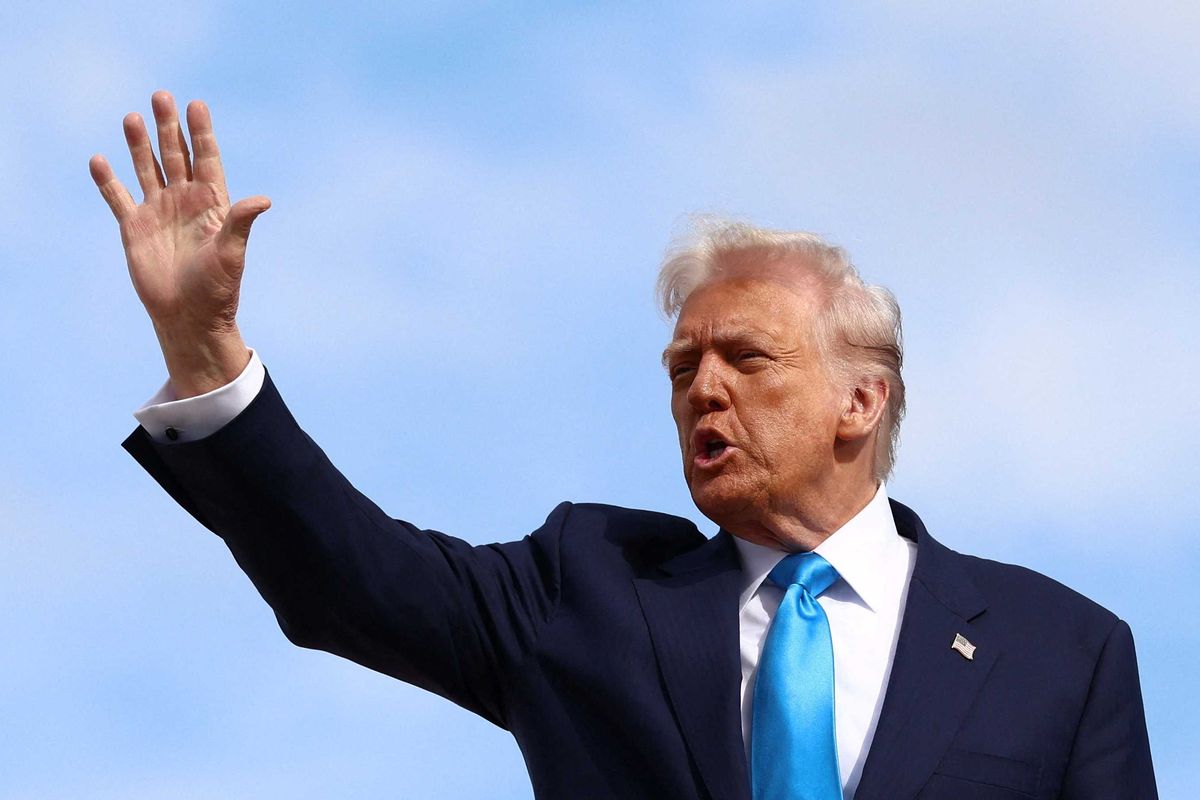
Trump blindsides key ally with stunning demand
rawstory.com - 27/Nov 02:07
President Donald Trump privately told the prime minister of Japan to back off its aggressive stance against China invading Taiwan, reported the Wall...
Trump blindsides key ally with stunning demand
rawstory.com - 27/Nov 02:07
President Donald Trump privately told the prime minister of Japan to back off its aggressive stance against China invading Taiwan, reported the Wall...
China spat with Japan on Taiwan deepens, reaches UN: What’s it all about?
wn.com - 22/Nov 09:27
China on Friday took its feud with Tokyo over Japanese Prime Minister Sanae Taikachi’s recent comments on Taiwan to the United Nations, as tensions...
China spat with Japan on Taiwan deepens, reaches UN: What’s it all about?
wn.com - 22/Nov 09:27
China on Friday took its feud with Tokyo over Japanese Prime Minister Sanae Taikachi’s recent comments on Taiwan to the United Nations, as tensions...
VP Hsiao gives interview to US media
taiwantoday.tw - 01/Dec 00:00
Vice President Hsiao Bi-khim recently gave an in-depth interview to the U.S. program War Room, hosted by Natalie Winters, aired Dec. 1 on U.S....
Deputy FM Chen gives interview to US Public Broadcasting Service
taiwantoday.tw - 01/Dec 00:00
Deputy Minister of Foreign Affairs Chen Ming-chi said Taiwan will continue to strengthen its self-defense capabilities and deepen global cooperation...
Deputy FM Chen gives interview to US Public Broadcasting Service
taiwantoday.tw - 01/Dec 00:00
Deputy Minister of Foreign Affairs Chen Ming-chi said Taiwan will continue to strengthen its self-defense capabilities and deepen global cooperation...
China warns Japan ‘crossed a red line’ with remarks about military intervention over Taiwan
wn.com - 24/Nov 22:43
China’s top diplomat blasted Japan over its new prime minister’s remarks about the possibility of military intervention over Taiwan. Chinese...
Les derniers communiqués
-
American Airlines invites AAdvantage members to help make a dierence this Giving Tuesday
AMERICAN AIRLINES - 01/12/2025
-
American Airlines to present at Goldman Sachs and Bernstein conferences
AMERICAN AIRLINES - 26/11/2025
-
American Airlines gets ready to unwrap deals for travelers this holiday season
AMERICAN AIRLINES - 25/11/2025
-
Belkin Expands Audio Range in the Middle East with SoundForm Anywhere True Wireless Earbuds
Belkin - 24/11/2025
-
Border Patrol Agents Face Shots Fired, Vehicle Rammings, Bricks Thrown in Chicago on Saturday
Amazon Web Service - 09/11/2025
-
Border Patrol Agents Face Shots Fired, Vehicle Rammings, Bricks Thrown in Chicago on Saturday
The Department of homeland security - 09/11/2025
-
ICE Arrests Worst of the Worst Criminal Illegal Aliens Including Pedophiles, Rapists and Violent Assailants
The Department of homeland security - 07/11/2025
-
DHS Sets the Record Straight on Misleading Video, Leaving Out Key Facts Including that the Woman Arrested Repeatedly Stabbed Her Coworker with Scissors
The Department of homeland security - 07/11/2025
-
United Airlines Launches MileagePlus Debit Rewards Card that Earns Miles for Spending and Saving
UNITED AIRLINES - 04/11/2025
-
American Airlines and AAdvantage members donate more than $1.2 million for Hurricane Melissa relief eorts
AMERICAN AIRLINES - 31/10/2025