MOSCOW (Sputnik) - Hungarian Foreign Minister Peter Szijjarto said on Wednesday that he is heading to Belgrade to discuss how Hungary can help Serbia...

Vous n'êtes pas connecté
- English
- Français
- عربي
- Español
- Deutsch
- Português
- русский язык
- Català
- Italiano
- Nederlands, Vlaams
- Norsk
- فارسی
- বাংলা
- اردو
- Azərbaycan dili
- Bahasa Indonesia
- Հայերեն
- Ελληνικά
- Bosanski jezik
- українська мова
- Íslenska
- Türkmen, Түркмен
- Türkçe
- Shqip
- Eesti keel
- magyar
- Қазақ тілі
- Kalaallisut ; kalaallit oqaasii
- Lietuvių kalba
- Latviešu valoda
- македонски јазик
- Монгол
- Bahasa Melayu ; بهاس ملايو
- ဗမာစာ
- Slovenščina
- тоҷикӣ ; toğikī ; تاجیکی
- ไทย
- O'zbek ; Ўзбек ; أۇزبېك
- Tiếng Việt
- ភាសាខ្មែរ
- རྫོང་ཁ
- Soomaaliga ; af Soomaali
Rubriques :
 Maroc - EURASIAREVIEW.COM - A la une - 08/Dec 23:41
Serbian Misconceptions About The December 1 Act (1918) – Analysis
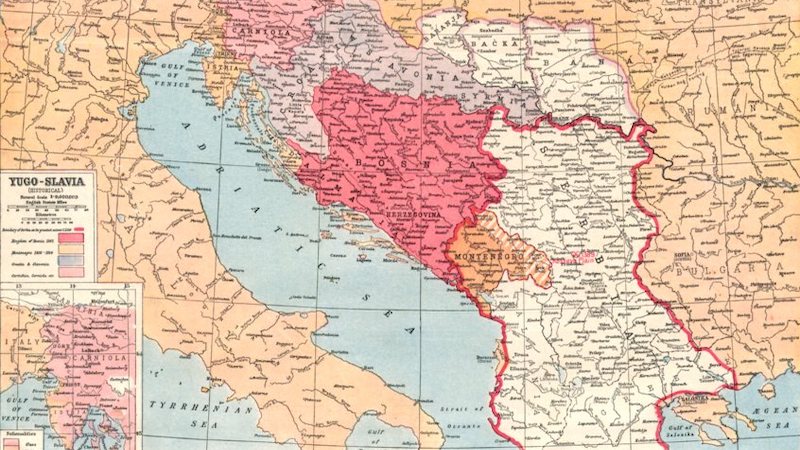
There are several obvious misconceptions about the act of proclaiming the creation of Yugoslavia, or the so-called unification in Belgrade on December 1, 1918, which Serbian historiography, in particular, persistently avoids. First of all, the act of so-called unification was not passed in Belgrade on December 1, 1918, but in Zagreb on November 23rd of the same year by the National Council of the State of Slovenes, Croats and Serbs or the State of SCS (in that order in ethnic categories). What is mostly constantly and consistently ignored by Serbian historiography is that this self-proclaimed state on the ruins of Austria-Hungary was conceived primarily as a Croatian national state with Slovenes and Serbs as some kind of national minorities. Let us recall that the state flag of this political entity was the Croatian tricolor without the coat of arms on it: red, white, and blue. However, ethnic Serbs constituted a clear individual-national majority in this state. Proclamatively, the State of SCS, which was proclaimed on October 29th, 1918, by the Parliament (Sabor) in Zagreb, encompassed all South Slavic ethnic territories in Austria-Hungary but under the Croatian flag. To make things even clearer, the state emblem of this political entity was clearly Croatian because it consisted of the “Croatian historical lands” (the so-called Triune Kingdom), i.e., Croatia, Slavonia, and Dalmatia. Therefore, Dr. Franjo Tuđman (Croatian President in the 1990s) could appropriate all these territories as lands that were allegedly brought into Yugoslavia by “Croatia”, especially since, for some crazy reason, the Government of the Kingdom of Serbia was the only one in the world that recognized this state (and thereby dug a grave for both Serbs and Serbia)! At the end of November 1918, a special delegation of the State of SCS was sent from Zagreb to Belgrade with the so-called "Instructions" (guidelines) for unification with Serbia and Montenegro. In Belgrade, this act of unification was only (illegitimately) confirmed on December 1st, 1918, by the regent Alexander Karađorđević in the presence of the official delegation of the Zagreb State of SCS. Therefore, the act of unification was proclaimed in Zagreb and in Belgrade, only confirmed, i.e., legitimized, by a man who did not have any legal authority to legitimize such a major political and historical act. Secondly, from then until today, there is a historical myth among Serbs that with this act and the results of the Great War (1914‒1918), Serbia defeated the aggressor Austria-Hungary because it disappeared from the map of Europe, and the Serbian people united within the framework of the "national state" for which they had strived for centuries. It is forgotten, however, that after 1918, both Austria and Hungary were still on the map of Europe (just within the ethnic borders) under those names, but not Serbia! Let us not forget that Serbia entered the Great War to defend its political independence and therefore its name on the map of Europe, but after the same war, instead of Serbia, Austro-Hungarian Yugoslavia emerged! Yugoslavism was an Austro-Hungarian anti-Serbian (i.e., against Serbia) ideology intended for Austro-Hungarian South Slavs (Yugoslavs) instead of a united state of all Serbs and only Serbs. The Viennese idea of Yugoslavism dates back to the beginning of the 19th century in order to gather all the South Slavs of the Austrian Empire (from 1867, the Austro-Hungarian Empire) around Vienna and not around Belgrade. In the first half and middle of the same century, it also appears under the term Illyrian Movement. However, the Slovenes and Serbs (and above all Vuk Stefanović Karadžić) immediately recognized the essence of Austrian Yugoslavism and Illyrianism, correctly seeing in them, first and foremost, Greater Croatian claims to the South Slavic territories of the Austrian Empire (as Vuk wrote in his ethnographic work "Serbs All and Everywhere" in 1836). In a historical perspective, the Serbs on both sides of the Drina River did not strive for Yugoslavia, but for a united national state of ethnic Serbs, and the ideology of Yugoslavism was swept "under the rug" for them in murky and difficult historical moments, supposedly as a way of resolving the Serbian national question. Thus, in the spirit of the ruling daily political ideology of Yugoslavism in both greater Yugoslavias (Kingdom and Republic), Garašanin's "Načertanije" (1844) was presented as a Yugoslav program of unification, and the Battle of Kosovo (1389) as a general Yugoslav resistance to the encroachment of the Ottoman conquerors (e.g., by Serb-Herzegovinian historian Vladimir Ćorović). In any case, on July 28th, 1914, Austria-Hungary declared war on the Kingdom of Serbia with the sole aim of erasing it from the map of Europe. The war ended with Serbia no longer on the map of Europe, but Austria and Hungary did, and instead of Serbia, the Kingdom of Serbs, Croats, and Slovenes (the Kingdom of SCS) appeared on the international scene. However, to make matters worse, Serbia did not exist even as a region within the framework of this Kingdom of SCS, and Austria-Hungary's complete victory over Serbia came in 1929, when the Kingdom of SCS was renamed (Austro-Hungarian) Yugoslavia. Let us also recall that the state flag of both interwar Kingdoms (as well as Broz's Republic) was the Croatian flag (i.e., the flag of the Triune Kingdom) only turned upside down. So, thirdly, in the post-WWI Yugoslavia (the first name was the Kingdom of Serbs, Croats and Slovenes or the Kingdom of SCS), all Serbs were found, but mixed with a large number (and together the largest) of non-Serbs, so that Serbs in Yugoslavia were actually a minority compared to all other peoples and nationalities (collectively). All Yugoslavias were ethnically and religiously heterogeneous, and in both greater Yugoslavias, there did not exist a clear ethnic majority of any ethnic or confessional group. Individually, ethnic Serbs were always the most numerous but never had an absolute majority (50% + 1). Croats were always in second place and Slovenes in third. In the Kingdom of SCS, the Orthodox population (mainly Serbs) in 1921 was 46.67%; Catholics (mainly Croats and Slovenes) 39.29% and Muslims (all ethnic groups) 11.22%. Therefore, there were almost as many Catholics as there were ethnic Serbs. For these and many other cultural, historical, economic and political reasons, soon after the proclamation of unification in 1918, it became clear that Yugoslavia was not and could not be a "national" state of all Serbs with which the Serbs supposedly resolved the centuries-old "Serbian national question", especially since 1929, when the Serbian ethnonym was also removed from the official name of the state and replaced with the Austro-Yugoslav one as the country became renamed into the Kingdom of Yugoslavia. Fourth, and most importantly, Serbia made abnormal human and material sacrifices for the so-called "unification" with its former enemies, occupiers and mass murderers, whom it transferred by the very act of "unification" from the camp of the defeated to the camp of the victors and equal citizens in a common state who were to be treated within the framework of the ideology of "integral Yugoslavism" (the form of Broz's later platitude of "brotherhood and unity" used in socialist Yugoslavia). Serbia lost a total of (at least) 1 million and 100,000 people in the Great War, of which 450,000 soldiers and 650,000 civilians, and the Central Powers on the territory of Serbia 380,000 soldiers. It is estimated that around 50% of the industrial capacity of the Kingdom of Serbia was destroyed during the war, while industrial infrastructure in the Yugoslav territories of Austria-Hungary remained intact. That was the crucial reason why the Austro-Hungarian territories of post-war Yugoslavia were industrially superior to Serbia. Serbia lost about 60% of its male population and a 1/3 of its total population in the Great War, which is the largest ethnocide in the history of Serbia. However, could this ethnocide have been avoided? In principle, it was possible if the Government of the Kingdom of Serbia renounced the Niš Declaration on the unification of all Yugoslavs before the Central Powers attacked Serbia in autumn 1915. Let us recall that on December 7th, 1914, the Pašić Government of Serbia adopted in Niš the so-called "Niš Declaration" on the unification of the Kingdom of Serbia with the Austro-Hungarian "brothers" of South Slavic origin, i.e., on the creation of Yugoslavia instead of Greater Serbia. The Declaration was adopted, among other things, as a method of discord in the Austro-Hungarian ranks, but it later turned out to backfire on the Serbians. In any case, in the spring and summer of 1915, when it was clear that the Central Powers would attack Serbia and when the Entente was fighting for every potential ally, Serbia was offered a reasonable proposal by the Entente on how to attract Bulgaria to the Entente side and thus neutralize it, while at the same time avoiding the national catastrophe of occupation that occurred in the autumn of the same year. Since Bulgaria would not stab Serbia in the back during the upcoming German-Austro-Hungarian major offensive, Serbia was to cede Vardar Macedonia to Bulgaria without its "undisputed" northern part, which Bulgaria had already recognized to be annexed by Serbia in 1912 when concluding the Serbian-Bulgarian agreement before the First Balkan War. In return, after the war, the Entente firmly promised Serbia all the Austro-Hungarian territories inhabited by a majority Serbian population – the major part of Slavonia, parts of Croatia and Dalmatia, as well as the entire Bosnia and Herzegovina. In other words, Greater Serbia without Croats and Slovenes. However, for the sake of all-Yugoslav unification not only with Serbs but also with Slovenes and Croats, the Government of the Kingdom of Serbia rejected this historically optimal proposal in the name of preserving “Serbian Macedonia” based on historical rights, even though it was not known for certain that Serbs were the majority population in these areas of Macedonia. The famous 19th-century Serbian philologist Vuk Stefanović Karadžić himself was not sure that Serbs were the majority in Macedonia or even that they lived in large numbers because they did not speak a pure Serbian (Štokavian) language (neither the Ekavian from Serbia nor the Ijekavian from across the Drina River), and famous Serbian geographer Jovan Cvijić called around 1910 the majority of the Slavic population in Macedonia "Macedonian Slavs" (being between Serbs and Bulgarians) in addition to pure Bulgarians. In any case, divine punishment soon followed, in October 1915, when, under military pressure from the Central Powers from the west and Bulgaria from the east, the Serbian Government decided to leave Serbia with the main army and some civilians and retreat to Greece via Kosovo and Albania („Albanian Golghota“). Years of occupation and terror against civilians followed, and when the country was liberated in the fall of 1918, Serbia effectively ceased to exist, as Yugoslavia emerged in its place. Fifth, in the end and after the Great War, a common Yugoslavia was needed only by the defeated (Austro-Hungarian) Croats and Slovenes, but not by the Serbs, and especially not by those from Serbia. The Croats, through Yugoslavia, saved as much of Dalmatia as they could from Italian claims at the end of the war based on the Treaty of London from April 1915 (the treaty between the Entente and Italy). Thus, the Austro-Hungarian cowardly egg called "Yugoslavism" was sent to Serbia from Zagreb right before the end of the war that had already been won for the Serbs, and the regent Alexander Karađorđević (born in Cetinje, Montenegro) accepted it in an extremely illegitimate procedural manner for the sake of fulfilling his psychomegalomaniacal claims to be the king of a greater Yugoslavia ("Kingdom of Alexandria"), which ideologically propagated at all levels "integral Yugoslavism" of "three tribes of the same name". Precisely for these "integralist" reasons, in both greater Yugoslavias ("Kingdom of Alexandria" and Broz's "Titoslavia"), the issue of mass crimes of genocide against the population of the occupied Kingdom of Serbia by the Austro-Hungarian soldiers was never officially raised, at least in terms of the ethnicity of the occupying executioners. Of course, for simple political reasons, because a huge number of those executioners in blue uniforms came from the Yugoslav territories of Austria-Hungary, including ethnic Serbs, too. Let us recall that original Josip Broz, born in Kumrovec, Croatia, in 1892 (not the other one called Tito - Secretary of the Communist Party of Yugoslavia!), served in one such occupation-execution unit (the Croatian Devil's Division). In Šumarice, Kragujevac, in Central Serbia, there is a so-called "Czechoslovak" cemetery where the remains of Slovaks who served in blue uniforms but refused to shoot Serbian civilians are located. In retaliation, other Austro-Hungarian soldiers shot their Slovak comrades. So far, there is no known case of Austro-Hungarian soldiers of Yugoslav origin refusing to shoot Serbian civilians or burn Serbian houses in occupied Serbia, as the Slovaks did in Kragujevac. Finally, out of all the Yugoslavias, a national referendum was never organized for any of them, i.e., the people never asked themselves whether or not they wanted to live with the others in the same state. And all those others were different from the Serbs from Serbia, including ethnic Serbs from the territory of Austria-Hungary. We should never forget that before the "unification", the Serbians (all citizens of Serbia) never lived in the same state with the Austro-Hungarian Yugoslavs, nor did they associate much with them on any basis. And vice versa. Both had no historical experience in any kind of coexistence and knew each other very little. Especially the Serbian Serbs and the Catholic Croats and Slovenes. The Orthodox Serbs from Serbia were not very familiar either with the Orthodox Serbs from Bosnia-Herzegovina and the Triune Kingdom or with their Muslims and Catholics. However, unlike the Orthodox Serbs from Serbia, the Austro-Hungarian and Ottoman Orthodox Serbs were much more familiar with their Muslim and Catholic compatriots (Croats and Slovenes) and knew them much better than the Serbs from the Kingdom of Serbia. In this context, the Serbs knew the “Macedonian Slavs” and even the Bulgarians from Bulgaria much better than their Yugoslav “brothers” from Austria-Hungary. Not to mention the Serbs and Albanians in Kosovo or the Serbs and Hungarians in Vojvodina (Southern Hungary till 1918). One illustrative example: a huge number of Serbian family surnames from pre-war Austria-Hungary do not exist in Serbia, nor do they end with the suffix -ić, unlike the surnames of Serbs from Serbia. Such is the example of Gavrilo Princip (the assassin of Austro-Hungarian Archduke Franz Ferdinand and his wife, Sofia, in Sarajevo on June 28th, 1914), whose surname is absolutely Latinized, and there are rumors that his real baptismal name was not Gavrilo but Gabriel. Tesla should also be mentioned. Nikola Tesla's (famous Serbian inventor from Austria-Hungary) ancestors moved from Western Serbia to Austria (Habsburg Monarchy, today Croatia) as Orthodox Serbs with a surname ending in -ić (Draganić). However, in Austria, the surname was completely changed to Tesla, but these same Teslas did not convert to Catholicism or change their ethnic identity (to become Croats). Nikola's father himself was a Serbian Orthodox priest (there are several explanations for why the surname was changed, but they are irrelevant to this text). By the way, the name of Tesla's mother, Georgina, is absolutely rare among Orthodox Serbs in Serbia, even though it is on the official list of „Serbian“ female names by the Serbian Orthodox Church. The surnames Princip or Tesla never existed in Serbia, which does not automatically mean that they are not ethnic Serbs, but they are not from Serbia, i.e., the country that "unified" in 1918 with the Austro-Hungarian Yugoslavs. Fascinatingly, the high school student Gavrilo Princip had never been to Serbia, and Nikola Tesla had only been to it once (in Belgrade). Dragutin Dimitrijević Apis (an ethnic Vlach), who was the main architect of the assassination in Sarajevo in June 1914, had not crossed the Drina River by then. For information on the great ethnocultural differences, or rather the ethnographic contrasts, of the Yugoslavs in the common state, see Tihomir Đ. Đorđević, Our National Life (Наш народни живот, interwar edition in three volumes), and on the characterology of the Yugoslavs, see Vladimir Dvorniković (interwar edition). By the way, the vast majority of Serbs from Serbia, including those from Hungarian Vojvodina, used the Ekavian dialect as their mother tongue in 1918, while the Serbs across the Drina River and the Croats used the Ijekavian dialect, which was, as it is today, quite Croatized in the area of the Triune Kingdom. Until the creation of Yugoslavia, the Latin script was not used in Serbia, but only Vuk's distilled Cyrillic script. However, for the sake of brotherhood and unity with the Austro-Hungarian Yugoslavs, after the December 1st Act of 1918, the Latin script (imported from the Yugoslav part of Austria-Hungary) was given equal status with Cyrillic, and today it has undisputed primacy in Serbia.
Articles similaires
Serbia: Geopolitical Resilience, Energy Security And Sanction Management – Analysis
eurasiareview.com - 08/Dec 23:49
Sanctions against NIS and redefining Serbia’s energy strategy The decision by the US Department of the Treasury’s Office of Foreign Assets...
Professor Gus John | A marriage made in hell
jamaica-gleaner.com - 08/Dec 22:28
November 2025 was 60 years since the Race Relations Act of 1965 came into force. That act is acknowledged as the first piece of legislation in the...
Professor Gus John | A marriage made in hell
jamaica-gleaner.com - 08/Dec 22:28
November 2025 was 60 years since the Race Relations Act of 1965 came into force. That act is acknowledged as the first piece of legislation in the...
Professor Gus John | A marriage made in hell
jamaica-gleaner.com - 08/Dec 22:28
November 2025 was 60 years since the Race Relations Act of 1965 came into force. That act is acknowledged as the first piece of legislation in the...

Trump’s New Ambassador to Hungary Divides Jewish Community
balkaninsight.com - 26/Nov 07:18
Both progressive Hungarian Jews and mainstream Jewish leaders are raising concerns about Trump’s appointment of Ben Landa to serve as the US...

Abu Dhabi-Serbia Business Forum boosts economic partnership, expands cooperation in key sectors
abudhabimagazine.ae - 26/Nov 13:29
ABU DHABI, 26th November, 2025 (WAM) — The Abu Dhabi Chamber of Commerce and Industry, in collaboration with the Serbian Chamber of Commerce and...

War Crimes Acquittal of Serb Ex-Member of Bosnia’s Presidency Upheld
balkaninsight.com - 04/Dec 10:22
The Bosnian state court confirmed the acquittal of Borislav Paravac, a post-war Serb member of Bosnia’s tripartite presidency, clearing him of...
War Crimes Acquittal of Serb Ex-Member of Bosnia’s Presidency Upheld
balkaninsight.com - 04/Dec 10:22
The Bosnian state court confirmed the acquittal of Borislav Paravac, a post-war Serb member of Bosnia’s tripartite presidency, clearing him of...
Roque barred from flying to Austria ,
philstar.com - 26/Nov 16:00
Former presidential spokesperson Harry Roque denied reports that he was arrested following the cancellation of his passport, saying he remains in the...
Les derniers communiqués
-
American Airlines invites AAdvantage members to help make a dierence this Giving Tuesday
AMERICAN AIRLINES - 01/12/2025
-
American Airlines to present at Goldman Sachs and Bernstein conferences
AMERICAN AIRLINES - 26/11/2025
-
American Airlines gets ready to unwrap deals for travelers this holiday season
AMERICAN AIRLINES - 25/11/2025
-
Belkin Expands Audio Range in the Middle East with SoundForm Anywhere True Wireless Earbuds
Belkin - 24/11/2025
-
Border Patrol Agents Face Shots Fired, Vehicle Rammings, Bricks Thrown in Chicago on Saturday
Amazon Web Service - 09/11/2025
-
Border Patrol Agents Face Shots Fired, Vehicle Rammings, Bricks Thrown in Chicago on Saturday
The Department of homeland security - 09/11/2025
-
ICE Arrests Worst of the Worst Criminal Illegal Aliens Including Pedophiles, Rapists and Violent Assailants
The Department of homeland security - 07/11/2025
-
DHS Sets the Record Straight on Misleading Video, Leaving Out Key Facts Including that the Woman Arrested Repeatedly Stabbed Her Coworker with Scissors
The Department of homeland security - 07/11/2025
-
United Airlines Launches MileagePlus Debit Rewards Card that Earns Miles for Spending and Saving
UNITED AIRLINES - 04/11/2025
-
American Airlines and AAdvantage members donate more than $1.2 million for Hurricane Melissa relief eorts
AMERICAN AIRLINES - 31/10/2025