By Thuta Aung Myanmar is facing a growing waste-management crisis as rising urbanisation, increased consumption, and ongoing conflict strain a...

Vous n'êtes pas connecté
- English
- Français
- عربي
- Español
- Deutsch
- Português
- русский язык
- Català
- Italiano
- Nederlands, Vlaams
- Norsk
- فارسی
- বাংলা
- اردو
- Azərbaycan dili
- Bahasa Indonesia
- Հայերեն
- Ελληνικά
- Bosanski jezik
- українська мова
- Íslenska
- Türkmen, Түркмен
- Türkçe
- Shqip
- Eesti keel
- magyar
- Қазақ тілі
- Kalaallisut ; kalaallit oqaasii
- Lietuvių kalba
- Latviešu valoda
- македонски јазик
- Монгол
- Bahasa Melayu ; بهاس ملايو
- ဗမာစာ
- Slovenščina
- тоҷикӣ ; toğikī ; تاجیکی
- ไทย
- O'zbek ; Ўзбек ; أۇزبېك
- Tiếng Việt
- ភាសាខ្មែរ
- རྫོང་ཁ
- Soomaaliga ; af Soomaali
Rubriques :
 Maroc - EURASIAREVIEW.COM - A la une - Hier 02:42
Myanmar Waste Problem: Subtle But Challenging – Analysis
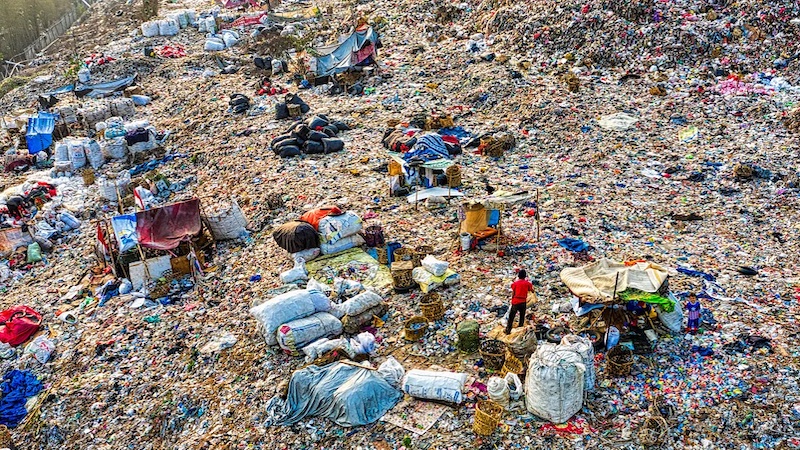
By Thuta Aung Myanmar is facing a growing waste-management crisis as rising urbanisation, increased consumption, and ongoing conflict strain a system already weakened by decades of neglect. Key Takeaways: Myanmar had seen rapid booming in urbanisation, population, and consumption, which brought along waste management issues. The country is still using decade-old handling methods for its waste, although the previous elected government had tried to improve the system. Following the 2021 polycrisis, the system deteriorated, threatening the quality of life and demanding a solution; if not, the issues would become a chronic problem. Combined with increased consumption, population growth in Myanmar has led to a gradual increase in waste generation across its major cities and rural areas, except in the major war-torn regions, where scarcity drives down consumption. But the country’s waste management is still heavily dependent on landfills, and even the transportation system of waste to the designated landfill area has collapsed after the coup. Countries in the Southeast Asia region have adopted their own waste management policies, practices, and expertise to address their waste issues, while Myanmar is tackling its own problem, unable to care for the management of throw away. Even so, the waste problem is still vulnerable to being cleared up, as it may impact society, the economy, and the environment in the long run. The status of waste in Myanmar According to the 2017 data, Myanmar’s waste generation is 0.44 kg/capita/day, significantly below the global average of 0.74 kg/capita/day. But even before the 2021 crisis, the population of the country was roughly divided into 30% of urban residents and 70% residing in rural regions. The urban population is growing after many people fled to major cities due to the instabilities in their region. Thus, the waste generation in cities is soaring while the waste management is in a struggle. The major city, Yangon, the economic capital of Myanmar, with a population of5.8 million, has 6 landfill sites with a combined capacity of 2064 tons/day, and all of them are open dumping conditions. Upon domestic use, the importation of plastic waste is also considerable, unless the country totally bans the importation of plastic waste by all means. The second largest city, Mandalay, disposes of its waste in two active landfill sites with a combined capacity of 750 tons/day, and also has open dumping conditions. The majority of municipal solid waste is mainly composed of organic waste, roughly 60-70 % of municipal waste. This makes it challenging in waste management as the organic waste generatesleachate, which may pollute the water resources, soil, and also demand complex waste treatment plants and facilities. Background history of the waste problem Myanmar had urbanised without a proper urban development plan, and waste management was neglected. The biggest city, Yangon, had been occupying nearby neighbourhoods to accommodate its growing population, but the sharp expansion had occurred after the political movement towards democratisation, when the country’s economy was on rise, establishing the industrial zones and property development plan, but without a suitable, standardised urban development plan, as the governing system was still operating on the military-shadowed bureaucracy. The population of the city also rose upon economic opportunity, but also added up from migrants from the cyclone ‘Nargis’ affected region. Even before democratisation, past governors failed to manage the simple transportation issue of waste in major cities, while the rural areas were totally neglected. The result of this led to a wastewater canal clogged with solid waste, with trash piling up, and waste being disposed of into a major waterway. During the past decades, Myanmar’s waste problem has gone round in circles with this problem. During the 2016-2020 government, the country’s waste sector was improved through policies, technological investment, and economic means. The National Waste Management Strategy & Master Plan 2018-2030 was set in 2018 with 6 main goals, and most of them are set to start their mid-term phase in 2021. Much research, baseline data, and recommendations of the Myanmar solid waste sector were done through international organisations and individual researchers during these years. Also, an innovative approach, a waste-to-energy plant was established in Thanlyin Special Economic Zone(SEZ), which not only generates electricity from combustion of municipal solid waste but also reduces CO2 emission, planned to reduce 5820 tons of CO2 emission in 2025. The city authority of Yangon had tried to replace the incinerator with small open dump landfill sites, and plans to set up landfill gas-to-energy recovery systems in major landfill sites. The open dump landfill system had tried to improve with an engineered landfill in Mandalay through the Mandalay City Development Committee (MCDC). Additionally, pilot-scale organic waste composting was conducted in Mandalay to be applied in rural areas. The capital, Nay Pyi Taw, had no designated landfill site, with only six recent open dump sites as of 2016 data. The rural area of the country mainly practices open dump landfill or uncontrolled open-air incineration, with little to no access to proper waste disposal and treatment systems. Drawbacks and weak points of the waste management effort But since that time, Myanmar’s waste management sector has had many weak points and requirements. Although the master plan was set in 2018, aiming to standardise tools and plans for each waste type, there was no update or improvement of the existing laws; some were enacted in the colonial era, like the City of Yangon Municipal Act (1922). The different major cities were managed by different sets of laws and regulations on waste management demand. The 6 goals set by the master plan exclude how to reduce the landfill problem, but do mention how to improve waste collection and eliminate uncontrolled disposal. The economy of waste was not adequately mentioned, even though it includes improving the circular economy in the mission statement. It plans to utilise Extended Producer Responsibility (EPR) as a regulatory tool, but does not mention a specific time to implement. The waste management in Myanmar is facing challenges in the technological and economic sectors. The lack of skilled labour and ongoing open dump styles retard the effort to handle waste properly. And the initial investments in waste treatment facilities, and return-on-investment(ROI) are also considerable factors. Also, the inability to invite the private sector into waste treatment. Current Situation During the country’s polycrisis after 2021, the collapse of civil services caused the waste management system to be unusable, and even the collection of waste became unreliable, and some parts of cities lost access to the municipal waste collection system. An unstable waste management system led to inaccessibility to waste treatment facilities. The treatment facilities are still running on past civilian government projects. In a war-torn area, waste management is undermined, and hard to focus on these types of issues. But MNDAA (Myanmar National Democratic Alliance Army) announced the waste collection tax in Lashio during their administration, but this was just following the municipal laws just a fee for collection service. In the NUG(National Unity Government) controlled area, where millions of internally displaced people and at risk of war, the waste management is unimaginable in those areas; the waste management and circular economy are not a priority in the Myanmar transition stage. In major cities, after the INGOs left due to the country’s system unreliability, imposition of strict rules to track and monitor practices, local NGOs tried to educate about waste management, but their activities are monitored and remotely controlled by the military government, unable to run publicly for mass participation due to the military government’s political unwillingness, limiting their effort. As the majority of people are struggling with their livelihoods and are unable to think about their waste, the military government also ignores the issue. But the lack of systematic waste management in the country may lead to severe consequences like water pollution and resource depletion, degradation of life quality, and a threat to public health. Considering the above-mentioned issues, the waste problem is taken into account in shaping the future sustainable Myanmar. Although the country is in crisis, the issues should be highlighted through civic engagement activities and raising awareness about them, to prevent future man-made disasters and pollution. Conclusion Myanmar had long been practising the 20th-century concept of waste management, while the booming, unsystematic urbanisation and population demand effective waste management, due to military dictatorship, poverty, and isolation. Although there was an effort in waste management during the previous elected government, the implementation was hindered due to many factors, and those efforts vanished after 2021. However, the issue is still going on and threatening the quality of life in Myanmar. Thuta Aung is a Research Assistant at the Sustainability Lab of the Shwetaungthagathu Reform Initiative Centre (SRIc), holds a B.Sc. in Geology, and is currently pursuing Environmental Science at Chiang Mai University, Thailand. This article was published at The Sabai Times
Articles similaires
Could electric vehicle battery waste fix concrete’s carbon problem?
wn.com - 03/Dec 19:04
Concrete is the most widely used man-made material on Earth. Parilov/Shutterstock Imagine waking up in 2040 to unusually quiet streets. By then, an of...

Sham Election By The Myanmar Military Junta – Analysis
eurasiareview.com - 08/Dec 00:14
1. Introduction Rejecting the results of the 2020 General Election over allegations of electoral fraud, the Myanmar military, also known as...

The Tobago Yaws Hospital 1902-1921
newsday.co.tt - 07/Dec 08:50
The harsh working and living conditions that enslaved Africans in Tobago endured did not include access to clean water and sanitation arrangements....

10 Most Interesting Science News of 2025
thecekodok.com - 08/Dec 10:34
The year 2025 will see interesting developments in seeing the impact of AI in daily activities, species thought to be lost are rediscovered and gene...

The Deadly Trade-Off Of Electronic Waste Recycling In Ghana
eurasiareview.com - 05/Dec 23:18
A University of Michigan study found that people in Ghana and across the Global South who recycle electronic waste face a difficult paradox: earning...

$80m waste
newsday.co.tt - 03/Dec 03:11
TIME AND time again, we are told of the shortages in the public health system. There’s a shortage of doctors. There’s a shortage of nurses. Not...

Parliament committee queries accountability — $80M in drugs left to expire
newsday.co.tt - 02/Dec 06:19
CONCERNS have been raised over issues of due diligence and accountability as a committee of Parliament heard on Monday that a whopping $80 million...
Parliament committee queries accountability — $80M in drugs left to expire
newsday.co.tt - 02/Dec 06:19
CONCERNS have been raised over issues of due diligence and accountability as a committee of Parliament heard on Monday that a whopping $80 million...

Judge dismisses accident victim's medical negligence claim against NCRHA
newsday.co.tt - 10/Dec 14:56
THE High Court has dismissed a medical negligence claim brought by an accident victim against the North Central Regional Health Authority (NCRHA)...
Les derniers communiqués
-
American Airlines invites AAdvantage members to help make a dierence this Giving Tuesday
AMERICAN AIRLINES - 01/12/2025
-
American Airlines to present at Goldman Sachs and Bernstein conferences
AMERICAN AIRLINES - 26/11/2025
-
American Airlines gets ready to unwrap deals for travelers this holiday season
AMERICAN AIRLINES - 25/11/2025
-
Belkin Expands Audio Range in the Middle East with SoundForm Anywhere True Wireless Earbuds
Belkin - 24/11/2025
-
Border Patrol Agents Face Shots Fired, Vehicle Rammings, Bricks Thrown in Chicago on Saturday
Amazon Web Service - 09/11/2025
-
Border Patrol Agents Face Shots Fired, Vehicle Rammings, Bricks Thrown in Chicago on Saturday
The Department of homeland security - 09/11/2025
-
ICE Arrests Worst of the Worst Criminal Illegal Aliens Including Pedophiles, Rapists and Violent Assailants
The Department of homeland security - 07/11/2025
-
DHS Sets the Record Straight on Misleading Video, Leaving Out Key Facts Including that the Woman Arrested Repeatedly Stabbed Her Coworker with Scissors
The Department of homeland security - 07/11/2025
-
United Airlines Launches MileagePlus Debit Rewards Card that Earns Miles for Spending and Saving
UNITED AIRLINES - 04/11/2025
-
American Airlines and AAdvantage members donate more than $1.2 million for Hurricane Melissa relief eorts
AMERICAN AIRLINES - 31/10/2025