
BY BLAISE UDUNZE Nigeria’s refining crisis is one of the country’s most enduring economic contradictions. Africa’s largest crude oil...

Vous n'êtes pas connecté
- English
- Français
- عربي
- Español
- Deutsch
- Português
- русский язык
- Català
- Italiano
- Nederlands, Vlaams
- Norsk
- فارسی
- বাংলা
- اردو
- Azərbaycan dili
- Bahasa Indonesia
- Հայերեն
- Ελληνικά
- Bosanski jezik
- українська мова
- Íslenska
- Türkmen, Түркмен
- Türkçe
- Shqip
- Eesti keel
- magyar
- Қазақ тілі
- Kalaallisut ; kalaallit oqaasii
- Lietuvių kalba
- Latviešu valoda
- македонски јазик
- Монгол
- Bahasa Melayu ; بهاس ملايو
- ဗမာစာ
- Slovenščina
- тоҷикӣ ; toğikī ; تاجیکی
- ไทย
- O'zbek ; Ўзбек ; أۇزبېك
- Tiếng Việt
- ភាសាខ្មែរ
- རྫོང་ཁ
- Soomaaliga ; af Soomaali
Rubriques :
 Maroc - EURASIAREVIEW.COM - A la une - 17/Dec 01:08
US LPG: A Potential Gamechanger In Energy Geopolitics – Analysis
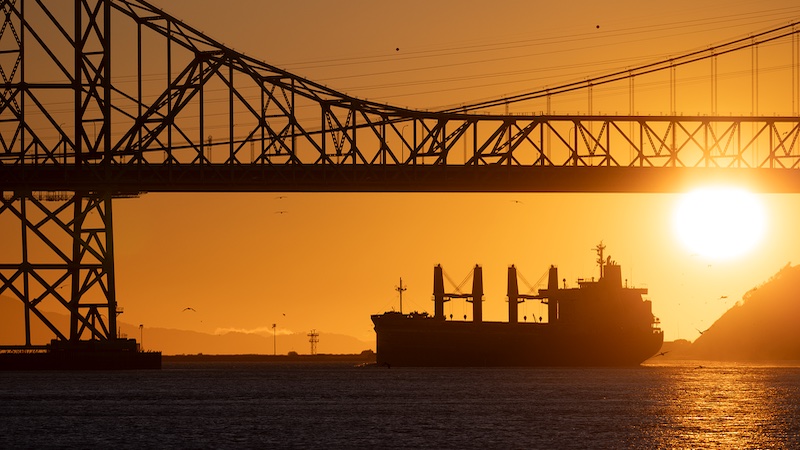
By Francesca Ming The global energy map is quietly being redrawn far more than headlines suggest. While governments argue about critical mineral and hydrogen investments, the most consequential shift for much of the developing world is happening in an overlooked corner of the hydrocarbons market: liquefied petroleum gas (LPG). LPG, long dismissed as a secondary fuel, is an energy-dense gas consisting of mainly propane and butane. This transition fuel is now shaping geopolitical alignments in Africa, South Asia, and parts of Latin America—regions where influence increasingly hinges on who can provide reliable, cleaner-burning energy at scale. The United States finds itself and the core of this shift. Its surging LPG output has turned the Gulf Coast into a lifeline for regions struggling with energy poverty or with the political risks of relying on more volatile suppliers. Companies such as Geneva-based BGN Group, now the largest single buyer of US LPG, and traders like Petredec—the world’s largest independent LPG trader, moving roughly 12 million tonnes annually—have become pivotal intermediaries in the global energy system, channeling US and Gulf supply toward Asia and Africa, reshaping fuel access in regions most exposed to energy and price shocks. What gives LPG its strategic edge is not merely availability but the immediate environmental benefit it brings. Propane produces around 40% less CO₂ than coal for the same energy with almost no soot. In parts of Africa and South Asia, where nearly a billion people still cook with wood or charcoal, that difference translates directly into infrastructure and climate. Analysts estimate that a large-scale shift to LPG cooking could eliminate over 100 million tonnes of CO₂-equivalent black-carbon emissions annually. That’s comparable to wiping out the emissions of a sizeable industrial state. When traders supplying these markets note that LPG adoption “profoundly reduces carbon footprints,” the point is not rhetorical, but rather represents measurable reductions that governments cannot easily achieve elsewhere. This helps explain why LPG suddenly sits near the center of high-level diplomacy. G20 leaders in 2025 endorsed it as the most immediate and scalable solution for Africa’s clean-cooking crisis. The International Energy Agency expects LPG to deliver half of all new clean-cooking access by 2030. US development programs, especially Power Africa, have followed suit by supporting solar-plus-LPG systems and calling propane a safe, efficient, and cost-effective substitute for high-emission household fuels. With Beijing and Washington competing for influence in the Global South, the ability to offer a fuel that lowers emissions and is actually affordable gives the United States an unexpected soft-power advantage. Another underappreciated geopolitical reality is that these flows are not controlled by states but by traders. These firms act as the system’s shock absorbers whenever conflict or climate disruptions threaten supply. When the Red Sea, Panama Canal, or Black Sea face bottlenecks, it is these companies—not national oil firms—that reroute LPG to keep markets stable. Alongside BGN and Petredec, players like SwissChemGas have built the flexibility to shift volumes from the US Gulf or the Arabian Gulf to whichever region is hit hardest by shortages. Their decisions have direct political consequences. In many developing economies, LPG shortages translate into rising food prices and civil unrest. There’s a growing concern emerging around how these commodities are shipped. As the U.S. and the International Maritime Organization tighten emissions rules, traders with modernized fleets are gaining strategic leverage. BGN’s commissioning of dual-fuel VLGC tankers serves as an example of this broader shift. These huge vessels are now LNG-powered but are capable of switching to green ammonia in the future. They emit significantly less CO₂ per tonne shipped, cutting firms’ Scope 1 emissions while aligning with future regulatory standards. Other companies in the field, such as BW LPG, the world’s largest VLGC owner, are similarly retrofitting fleets, as the industry seems to increasingly understand that this is the future. Traders with compliant, low-carbon fleets will dominate the new US–Asia–Africa corridors, while laggards risk exclusion as climate-related restrictions harden. Domestic US policy reinforces this trajectory. Renewable propane is already recognized by the EPA as an approved renewable fuel, and state-level programs credit renewable LPG for its sharply lower carbon intensity—roughly four times lower, according to assessments. This means US exporters can offer a cleaner product at a time when more countries are being pushed into carbon-accounting frameworks. The fuel is the same, but its regulatory definition is changing fast. LPG may not have the glamour of hydrogen or offshore wind, but it is having a significant influence on how developing states report emissions and choose long-term energy partners. LPG is no longer a marginal commodity but rather a strategic instrument in the green transition era. It offers immediate climate gains in places where electrification remains decades away. It reduces reliance on dirtier fuels that undermine public health and put economies at risk. And crucially, it binds emerging markets more closely to whichever suppliers can guarantee reliability through crises. For now, that anchor is the United States, and by extension, the network of traders distributing American supply into regions where energy security is anything but abstract. Great power competition increasingly turns on which actors can deliver practical solutions rather than lofty decarbonization pledges. LPG fits that bill. It is not the end state of the energy transition, but it is one of the few tools capable of shaping geopolitics. The countries, and companies, that understand this are already rewriting the map. The views expressed in this article belong to the author(s) alone and do not necessarily reflect those of Geopoliticalmonitor.com.
Articles similaires

How Changing Your Diet Could Help Save The World – Interview
eurasiareview.com - 25/Dec 23:06
For many of us, the holiday season can mean delightful overeating, followed by recriminatory New Year’s resolutions. But eating enough and no...

NASA’s Webb Telescope Finds Bizarre Atmosphere On A Lemon-Shaped Exoplanet
eurasiareview.com - 26/Dec 23:24
Scientists using NASA’s James Webb Space Telescope have observed an entirely new type of exoplanet whose atmospheric composition challenges our...

KKTC (TRNC) Is Not A Copy, But A Model – OpEd
eurasiareview.com - 19/Dec 23:55
There has long been a repeated phrase about the Turkish Republic of Northern Cyprus (TRNC): “It is a small replica of Turkey.” This sentence...

US And Kazakhstan Announce Nuclear Energy Deal
eurasiareview.com - 26/Dec 01:06
(Eurasianet) -- While Kazakhstan has big plans to develop its nuclear power capacity, the United States is helping Astana think small. The US...

This Trump vandalism is worse than tearing down the East Wing of the White House
rawstory.com - 19/Dec 21:54
It’s the end of the year, and so one should be compiling ten-best lists.And I turned 65 last week, having spent almost my entire adult life in the...
This Trump vandalism is worse than tearing down the East Wing of the White House
rawstory.com - 19/Dec 21:54
It’s the end of the year, and so one should be compiling ten-best lists.And I turned 65 last week, having spent almost my entire adult life in the...
South Korea’s climate pledge to cut coal, lower emissions clash with US push for LNG purchases
wn.com - 29/Dec 07:42
SEOUL, South Korea (AP) — South Korea is promising to shrink its reliance on coal power as part of its pledge to reduce carbon emissions that...
South Korea’s climate pledge to cut coal, lower emissions clash with US push for LNG purchases
wn.com - 29/Dec 20:33
SEOUL, South Korea (AP) — South Korea is promising to shrink its reliance on coal power as part of its pledge to reduce carbon emissions that...

10 Most Interesting Malaysian Technology News of 2025
thecekodok.com - 16/Dec 20:52
2025 is the year of the annus mirabilis of the technology world in Malaysia. Various data center projects were announced, Intel strengthened...
Les derniers communiqués
-
SIXPACK-powered Dodge Charger Named Detroit News 2025 Vehicle of the Year
stellantis - 24/12/2025
-
Nvidia prepares to resume H200 chip exports to China
Nvidia - 22/12/2025
-
Jett Lawrence Injured in Training Crash
AMERICAN HONDA MOTOR CO - 20/12/2025
-
2026 Honda Accord Adds More Standard Tech and Sportier Styling; Now Arriving at Dealers
AMERICAN HONDA MOTOR CO - 18/12/2025
-
Honda Aircraft Company Unveils New HondaJet Upgrade Package
AMERICAN HONDA MOTOR CO - 18/12/2025
-
2025 Acura ADX Earns TOP SAFETY PICK Award from IIHS
AMERICAN HONDA MOTOR CO - 17/12/2025
-
Criminal Illegal Alien Viciously Bites ICE Officer While Resisting Arrest in Louisiana
The Department of homeland security - 12/12/2025
-
American Airlines invites AAdvantage members to help make a dierence this Giving Tuesday
AMERICAN AIRLINES - 01/12/2025
-
American Airlines to present at Goldman Sachs and Bernstein conferences
AMERICAN AIRLINES - 26/11/2025
-
American Airlines gets ready to unwrap deals for travelers this holiday season
AMERICAN AIRLINES - 25/11/2025