By Olayemi Esan, Celebrating the Chief of Army Staff on His Birthday | 18 December 2025Today, the Nigerian Army and the nation celebrate a...

Vous n'êtes pas connecté
- English
- Français
- عربي
- Español
- Deutsch
- Português
- русский язык
- Català
- Italiano
- Nederlands, Vlaams
- Norsk
- فارسی
- বাংলা
- اردو
- Azərbaycan dili
- Bahasa Indonesia
- Հայերեն
- Ελληνικά
- Bosanski jezik
- українська мова
- Íslenska
- Türkmen, Түркмен
- Türkçe
- Shqip
- Eesti keel
- magyar
- Қазақ тілі
- Kalaallisut ; kalaallit oqaasii
- Lietuvių kalba
- Latviešu valoda
- македонски јазик
- Монгол
- Bahasa Melayu ; بهاس ملايو
- ဗမာစာ
- Slovenščina
- тоҷикӣ ; toğikī ; تاجیکی
- ไทย
- O'zbek ; Ўзбек ; أۇزبېك
- Tiếng Việt
- ភាសាខ្មែរ
- རྫོང་ཁ
- Soomaaliga ; af Soomaali
Rubriques :
 Maroc - EURASIAREVIEW.COM - A la une - 17/Dec 00:58
Breaking The Glass Ceiling Of Irregular Warfare – Analysis

“The first, the supreme, the most far-reaching act of judgment that the statesman and the commander have to make is to establish…the kind of war on which they are embarking; neither mistaking it for, nor trying to make it into something that is alien to its nature. This is the first of all strategic questions and the most comprehensive.” – Carl von Clausewitz By Mark Grdovic (FPRI) -- Irregular warfare (IW) seems to be a topic with an equal ability to generate enthusiasm, resistance, and confusion. While the topic is without question of critical importance within the US military, the challenge remains how to define it, how to translate a definition into practical application, and, perhaps most importantly, how to inculcate the force to embrace it as requisite professional knowledge. For my colleagues who would quickly point out the DoD Instruction (DODI) 3000.07 Irregular Warfare published in September 2025 as an answer to my concerns, I can only say, “Oh how I wish it were that simple.” The DODI is latest in a long line of noble attempts to resolve this situation with an official document (e.g., the 2007 Joint Operating Concept, the 2010 Joint Integrating Concept, the 2020 Annex to the National Defense Strategy, and the 2023 Department of Defense Implementation Guidance. to name only a few). It will take more than a strongly worded document insisting that the Department of Defense places a premium on this capability (and therefore you should too) when it simultaneously disbands 33 percent of its Security Force Assistance Brigades in the name of restoring proper warfighting capability. We have been here before. I have often referred to the post-World War II periods of enthusiasm for IW as separate epochs, of which I count the current period as the fourth. While the specific wording and definitions have changed slightly over time, the same pattern of academic enthusiasm followed by eventual relegation when the first opportunity emerges. The first epoch (circa 1961–1970), largely categorized as Special Warfare, culminated with the start of the withdrawal from Vietnam. The second epoch (circa 1983–1990), categorized as Low Intensity Conflict, culminated with the end of the Cold War and the Gulf War in Kuwait. The third epoch (circa 2004–2012), categorized as Irregular Warfare, culminated with the withdrawal from Iraq, the killing of Osama bin Laden and the withdrawal of conventional forces from Afghanistan. The Russian invasion of Crimea gave birth to a fourth epoch (circa 2014–the present), retaining the terminology of Irregular Warfare, but with a rebranding away from counterterrorism and counterinsurgency and toward great-power competition. An argument could be made that the current period is really a continuation of the “third epoch.” However, current efforts are somewhat distinctly different than those of the previous period. In any case, this pattern of “boom and bust” should at least raise the question: Why does this keep happening? Why did the previous efforts to effectively integrate IW into the mainstream of US military culture not succeed? Perhaps more importantly, are current efforts following the same trajectory? A logical starting point for answering those questions could be to ask one additional question: Why should the US military be interested in IW? What is the perceived criticality and value of this elusive topic? The reasons why are not simple or intuitive. The simple answer is that all four epochs were periods categorized by the United States struggling to counteract new threats and/or adversaries (Vietnam, the rise of terrorism, the rise of insurgencies, and the rise of states using irregular proxies to conduct subversion and/or sabotage). In every case, the US military’s response produced mixed or inconclusive results while expending significant time, effort, and resources. A reasonable conclusion would be that IW warrants our close attention and a more deliberate approach to prevent this from happening again. The starting point that frames the collective thinking and subsequent understanding of IW is its definition. This is quite literally the foundation of the structure that is to follow and no amount of extra effort on the upper floors will mitigate any foundational deficiencies. It is concerning that the Joint and Army definitions are not the same and do not convey the same thing, simply said differently. Figure 1. Joint and Army Irregular Warfare Definitions The Joint and Army definitions both suffer from a series of non-defining declarative statements that add little to nothing to the definitions. The Army definition mentions “overt, clandestine or covert employment,” which is simply “all types of operations,” and both the Army and Joint definitions list “state and non-state actors,” which is essentially anyone. Other non-descriptive descriptions are “military and non-military capabilities,” meaning all capabilities, and “to assure or coerce,” which means to defend or attack. This leaves only one defining phrase for each definition. For the Joint definition, it comes down to (the conduct of) indirect, non-attributable, or asymmetric activities. For the Army definition, it comes down to (activities conducted) to achieve objectives other than military domination against an enemy. The result is that the joint definition defines IW by how activities are conducted while the Army defines it by the intended outcome on an adversary (e.g., influence/objectives other than military domination). Hoping that this is “good enough” as a foundation is like incorrectly tightening screws on a piece of machinery and hoping they do not rattle loose down the road. When this happens, it is not uncommon to see amplifying paragraphs and declarative statements in official documents in an attempt to clarify what the definition did not. This creates a dynamic where the reader is not necessarily sure of what the topic is but understands things about it. For example, DODI 3000.07 on page 4 states, “IW is an important method by which the DoD employs military forces as part of a broader whole-of-government approach in strategic competition to achieve national interests.” Said another way, “IW is important, and DoD uses it to do military stuff within strategies to achieve important things.” Figure 2. Irregular Warfare Operations and Activities as listed by the Army’s Center for Lessons Learned (CALL) Both the Joint community and the Army then make the leap to provide lists of IW operations and activities (see figure 1). While this might seem like it provides a degree of clarity, this is problematic for a few reasons. By reducing the topic to a list of activities, it is no longer a form of warfare with structure based in strategy but merely a nebulous environment in which tactical activities take place. Upon closer inspection, one might notice that the Joint and Army lists make almost no mention of an adversary’s activities to wage this form of warfare. This starts to create a very myopic approach that implies to the practitioner, “do not concern yourself with the What and Why, or your adversary’s strategy, and just focus on the How (to counter).” The second and perhaps greater issue is the fact that, arguably, the vast majority of the operations and activities listed are either countering efforts or not within the normal purview of the conventional force. I try to consider the E-6 squad leader who is doing his or her best to embrace and understand this topic, because they have continuously been told of its importance. Should they try to develop an understanding of Counter Threat Finance, Counterterrorism, Unconventional Warfare or the intricacies of Security Cooperation and Foreign Military Sales and the potential application to their troops? This reality creates an awkward and significant gap between the definition(s), their respective follow-on “descriptive” paragraphs, and the lists of operations and activities. I cannot help but be reminded of the famous quote: “Tactics without strategy is the noise before defeat.” This brings me back to the original question: What is the value proposition of the topic for military members? IW might be best understood, first and foremost, as a form of warfare that specifically avoids or mitigates an opponent’s superior military capabilities. It is warfare that employs indirect attacks (whether clandestine or overt, attributable or non-attributable, kinetic or non-kinetic) to erode or degrade an opponent’s capabilities or will to fight. While it can be employed independently or in concert with other conventional forms of warfare, it does not tend to produce results quickly or decisively. It is not superior to other forms of warfare. It is the best option when more direct options are not viable. However, if a target is unfamiliar with IW and/or ill-equipped to effectively counter it, then IW can produce positive strategic results over time. This provides a very different context for understanding IW and its strategic value. Within this context, we can also understand why the US military is also a primary target of IW strategies by opponents due to its superior military capabilities. Understanding IW in this way is the foundation for understanding how to counter it. Countering IW is not to be thought of (and should not be thought of) as synonymous with conducting it. Lumping all activities under one umbrella term of IW creates a false impression that the strategy of conducting IW is the same as the strategy for countering it (a single form of warfare), somewhat like fighting fire with fire. The solution to IW is not more IW. This is a unique dynamic compared to maneuver warfare, which is countered by better maneuver warfare. It is for this reason that crafting a definition that encompasses this construct has proven so challenging. In 2004, as Iraq was devolving into chaos, I wrote an article called Understanding Counterinsurgency. I made an analogy about how the US military is predisposed to think of combat like fighting an opposing boxer in a ring. However, counterinsurgency is more like a contest against an opposing lawyer to win over a jury (aka the population). How we frame the topic is critical to our thinking and understanding and the subsequent development of a viable strategy. Memorizing lists of tactics will not accomplish the intended educational objective. By not labeling the counter activities as IW, it also avoids any misperception or natural bias that these efforts are somehow in competition with other forms of warfare or core military functions. In fact, it more accurately places these activities in direct support of the broader Joint Force’s objectives by preserving and protecting those capabilities from being eroded and degraded. Figure 3. A Proposed Model of Irregular Warfare, its Associated Operations and Activities The counter activities should not be regarded as “irregular.” In this context, within the Department of Defense, there are certain organizations that do possess a charter and the associated capabilities to conduct IW. These organizations, the preponderance of which reside within the special operations and cyber communities, understand their requirements. There would be little to no value in attempting to combine the education requirements to counter and conduct this form of warfare into one topic. Additionally, many core functions and activities that would be conducted to counter an adversary’s use of IW do not suddenly make those activities IW themselves or some distinct IW variety of those functions. For example, logistics support, security cooperation, security force assistance efforts, stability operations, defensive cyber operations, space-based support, and intelligence sharing with an ally facing a form of IW do not need a new label as IW efforts. However, understanding the threat’s strategy and tactics provides useful context for how best to apply those core military functions. IW, and how to properly counter it, is a critical topic that needs to be a standard component of professional military education and training. It can be challenging to comprehend, not because it is the “graduate level of warfare,” but because it is unfamiliar. Again, think of the boxer or lawyer analogy: In the wrong context, each would be inappropriately prepared and dressed for the wrong fight. They would likely both rationalize their poor performance as being due to the “advanced or graduate level” of the conflict and not their own lack of awareness. The establishment of the Irregular Warfare Center along with the substantial and collaborative efforts underway between the Army’s Center for Lessons Learned at Fort Leavenworth and the John F. Kennedy Special Warfare Center and School at Fort Bragg are excellent steps in the right direction. However, every time an additional topic is bolted on and dropped into the proverbial rucksack of IW, it is a step backwards that makes their endeavors to educate the force more challenging and less likely to succeed. Strongly worded documents and enthusiasm alone will not mitigate a flawed foundation and stave off another period of relegation. The amount of analysis and staff work invested to date or “sunk cost” should never be a justification to say this will have to be “good enough.” It is critical to be aware of the previous efforts that came before this one and ask: Why did they fail? And is this effort on the same route staggered by time or on a different course? Alternately, if history is any indicator, we could just let things play out and take another shot at it during the next epoch in about ten years. About the author: Mark Grdovic is the author of Those Who Face Death: The Untold Story of Special Forces and the Iraqi Resistance. He has served with the 5th and 10th Special Forces Groups (Airborne), the U.S. Army John F. Kennedy Special Warfare Center and School, the U.S. Army Special Operations Command, the White House Military Office, and Special Operations Command, Central Command. Source: This article was published by FPRI
Articles similaires


Russia turns its diplomatic missions into elements of hybrid warfare – CCD
eng.uatv.ua - 28/Dec 12:43
Russia is systematically abusing diplomatic status, transforming its missions abroad into elements of hybrid warfare, UATV English reports. The...
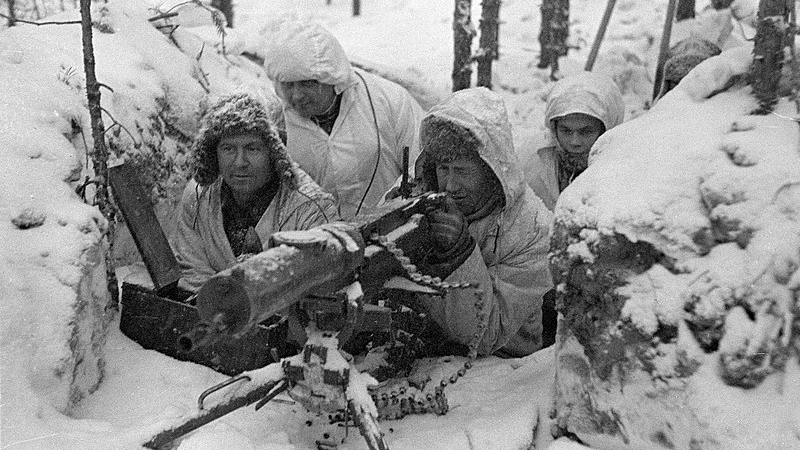
Risk Reduction Is Urgently Needed Amid Rising Tensions In Northern Europe – Analysis
eurasiareview.com - 17/Dec 01:09
By Dr Tytti Erästö and Dr Wilfred Wan Russia’s full-scale invasion of Ukraine in February 2022 fundamentally altered the security landscape...

Trinidad and Tobago vs international law
newsday.co.tt - 19/Dec 06:31
THE EDITOR: TT has long presented itself as a nation committed to the rule of law, the sanctity of life, and adherence to international norms. That...
Trinidad and Tobago vs international law
newsday.co.tt - 19/Dec 06:31
THE EDITOR: TT has long presented itself as a nation committed to the rule of law, the sanctity of life, and adherence to international norms. That...
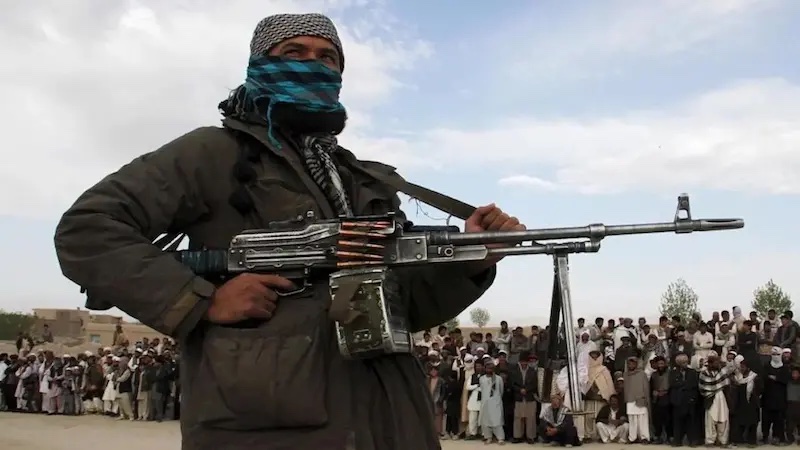
Weaponizing Religion: The Ways In Which Fitna-Ul-Khawarij TTP Twists – OpEd
eurasiareview.com - 17/Dec 16:29
In current times, some hardline groups with the emblem of "religious militancy" have amplified their propaganda efforts against Pakistan. In one such...
Weaponizing Religion: The Ways In Which Fitna-Ul-Khawarij TTP Twists – OpEd
eurasiareview.com - 17/Dec 16:29
In current times, some hardline groups with the emblem of "religious militancy" have amplified their propaganda efforts against Pakistan. In one such...
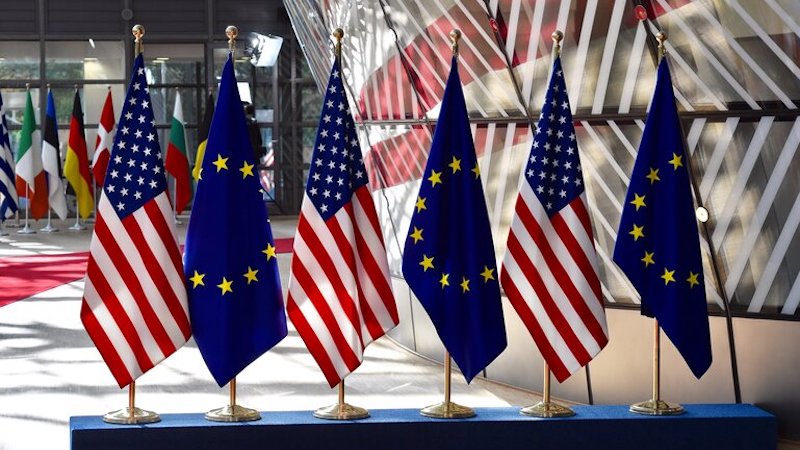
NSS 2025 And The European Moment Of Truth – Analysis
eurasiareview.com - 18/Dec 17:19
Europe is entering a moment of historical truth. For the first time since the end of the Cold War, it is no longer facing a temporary crisis, but a...
NSS 2025 And The European Moment Of Truth – Analysis
eurasiareview.com - 18/Dec 17:19
Europe is entering a moment of historical truth. For the first time since the end of the Cold War, it is no longer facing a temporary crisis, but a...

Happy Xmas (under Trump, war is far from over)
rawstory.com - 25/Dec 17:04
Earlier this month, the Trump administration released its new National Security Strategy, or NSS. Normally, such documents are poor predictors of...
Les derniers communiqués
-
SIXPACK-powered Dodge Charger Named Detroit News 2025 Vehicle of the Year
stellantis - 24/12/2025
-
Nvidia prepares to resume H200 chip exports to China
Nvidia - 22/12/2025
-
Jett Lawrence Injured in Training Crash
AMERICAN HONDA MOTOR CO - 20/12/2025
-
2026 Honda Accord Adds More Standard Tech and Sportier Styling; Now Arriving at Dealers
AMERICAN HONDA MOTOR CO - 18/12/2025
-
Honda Aircraft Company Unveils New HondaJet Upgrade Package
AMERICAN HONDA MOTOR CO - 18/12/2025
-
2025 Acura ADX Earns TOP SAFETY PICK Award from IIHS
AMERICAN HONDA MOTOR CO - 17/12/2025
-
Criminal Illegal Alien Viciously Bites ICE Officer While Resisting Arrest in Louisiana
The Department of homeland security - 12/12/2025
-
American Airlines invites AAdvantage members to help make a dierence this Giving Tuesday
AMERICAN AIRLINES - 01/12/2025
-
American Airlines to present at Goldman Sachs and Bernstein conferences
AMERICAN AIRLINES - 26/11/2025
-
American Airlines gets ready to unwrap deals for travelers this holiday season
AMERICAN AIRLINES - 25/11/2025