As we enter the fourth year of the devastating Russia-Ukraine war, the conflict continues to claim tens of thousands of lives with no immediate end...

Vous n'êtes pas connecté
- English
- Français
- عربي
- Español
- Deutsch
- Português
- русский язык
- Català
- Italiano
- Nederlands, Vlaams
- Norsk
- فارسی
- বাংলা
- اردو
- Azərbaycan dili
- Bahasa Indonesia
- Հայերեն
- Ελληνικά
- Bosanski jezik
- українська мова
- Íslenska
- Türkmen, Түркмен
- Türkçe
- Shqip
- Eesti keel
- magyar
- Қазақ тілі
- Kalaallisut ; kalaallit oqaasii
- Lietuvių kalba
- Latviešu valoda
- македонски јазик
- Монгол
- Bahasa Melayu ; بهاس ملايو
- ဗမာစာ
- Slovenščina
- тоҷикӣ ; toğikī ; تاجیکی
- ไทย
- O'zbek ; Ўзбек ; أۇزبېك
- Tiếng Việt
- ភាសាខ្មែរ
- རྫོང་ཁ
- Soomaaliga ; af Soomaali
Rubriques :
 Maroc - EURASIAREVIEW.COM - A la une - 21/Feb 00:09
Could The Russia-Ukraine War End Within This Year? – Analysis
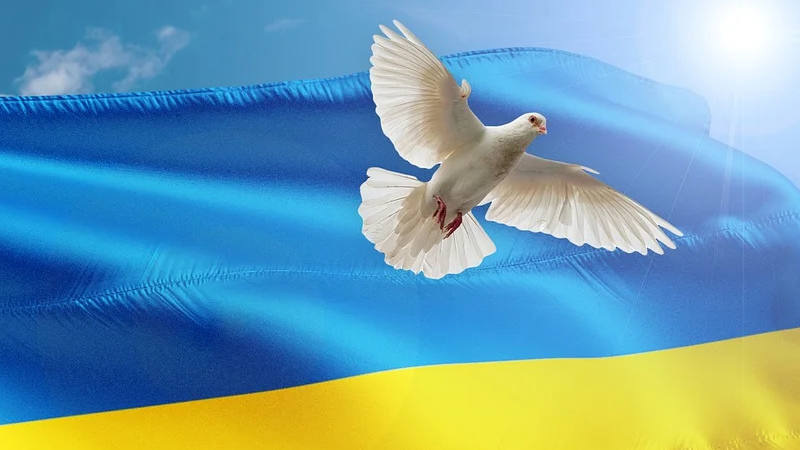
As we enter the fourth year of the devastating Russia-Ukraine war, the conflict continues to claim tens of thousands of lives with no immediate end in sight. Russia’s persistent territorial ambitions and diplomatic intransigence remain the primary obstacles to restoring peace and stability in the region. This relentless war, devoid of any humanitarian benefit, has resulted in nothing but widespread destruction and human suffering. While the global community yearns for a return to peace and stability, the current situation on the ground remains complex. However, despite the ongoing hostilities, several emerging geopolitical factors suggest that the conflict could reach a decisive turning point-and potentially a conclusion-within 2026. To understand this potential shift, it is essential to first analyze the evolving positions of the primary actors involved in this global crisis. European Aspirations vs. Geopolitical Reality The European states, particularly the Western bloc, have remained primary stakeholders in the continuation of this conflict, viewing it as a defense of their own long-term interests. Currently, there is a visible effort to pull the United States-under the second Trump administration-more deeply into the theater as a decisive actor. The European hope is that by shifting the strategic burden to Washington, a new regional power balance can be forged, facilitating what could be described as Europe’s "salvation" from a prolonged security crisis. However, this strategy is fraught with contradictions. While supporting the war’s continuation, European nations are simultaneously suffering its most severe consequences. The ongoing political-military crisis and socio-economic volatility are eroding Europe's global standing, forcing a deeper dependency on the United States and other external actors. For the West, cease-fire negotiations are no longer merely a diplomatic preference but a necessity for self-preservation. In this regard, the successive diplomatic initiatives in Istanbul, Alaska, and Abu Dhabi were all viewed as potential turning points. Europe monitored these high-level meetings with immense anticipation, hoping that each would finally deliver a breakthrough toward a durable cease-fire. Yet, the reality has diverged sharply from European expectations. This disconnect stems largely from Europe’s often utopian approach to the peace process. Their idealized scenario-immediate cease-fire, full restoration of Ukraine’s territorial integrity, unconditional Russian withdrawal, and a permanent end to Moscow’s threats-ignores the brutal calculations of the Kremlin. The reality on the ground is sobering: after 4 years of high-intensity warfare, while Russia has not achieved a total strategic victory, it is far from defeated. The war is fought on Ukrainian soil, resulting in the systematic destruction of Ukrainian infrastructure and the loss of countless lives. Russian forces have fortified their positions in occupied territories and continue to launch daily offensives. Furthermore, the Kremlin’s operational logic remains indifferent to human costs- whether their own or the enemy's. Moscow appears committed to a war of attrition regardless of the price. This persistence ensures that Russia remains an active and lethal threat to European security - a threat that a militarily unprepared Europe remains ill-equipped to confront on its own. Ukraine’s Aspirations: Between Peace and Sovereignty Having endured the most brutal and violent aspects of this conflict, the Ukrainian people have long yearned for an end to the hostilities-at the very least, through a negotiated cease-fire. For the vast majority of the population, the singular, overriding desire is the cessation of war and a return to societal normalcy. However, from the perspective of the Ukrainian state, ending the war under conditions dictated by Moscow remains unacceptable. Such a capitulation would directly undermine the nation's independence, sovereignty, constitutional order, and, most critically, its territorial integrity. The war, fought under increasingly severe conditions, is inflicting irreparable damage on Ukraine’s demographic future-its "gene pool." The exodus of millions, the loss of young and middle-aged citizens on the front lines, and the systematic destruction of critical infrastructure represent staggering national losses. Prolonging the conflict, in its current trajectory, only serves to deepen this existential crisis. Consequently, a clear strategic objective has emerged for the Ukrainian front: to conclude the war in the shortest possible timeframe. The recent surge in kinetic operations-including targeted strikes deep within Russian territory, the sabotage of industrial complexes, and the systematic disruption of Russia’s oil and gas infrastructure-reflects this desperate drive to force a resolution. These actions suggest that 2026 will be the pivotal year in determining the ultimate fate and direction of the war. Russia’s Position: Maximalist Demands and Emerging Vulnerabilities Despite failing to secure a decisive victory, Russia remains far from defeated, a reality that fuels the Kremlin’s insistence on a peace settlement based solely on its own stringent terms. The Alaska Summit laid bare Vladimir Putin’s maximalist objectives: the complete annexation of the Donbas, formal international recognition of Crimea as Russian territory, a permanent ban on Ukraine’s NATO membership, and the institutionalization of the Russian language and the Russian Orthodox Church within Ukraine. Moscow’s willingness to offer only marginal concessions in return highlights its uncompromising stance. Throughout the conflict, Russia has developed a degree of "geopolitical immunity," leveraging its domestic resilience and a network of strategic allies to withstand Western pressure. While the narrative that the war does not significantly harm Russia is widely propagated, the reality of a prolonged conflict has brought severe challenges to the surface. The systematic Ukrainian strikes on Russia’s critical infrastructure-specifically its oil and gas industrial complexes-are beginning to take a heavy toll. By targeting the very heart of the Russian economy, Kyiv is challenging Moscow’s ability to sustain a long-term war of attrition. Consequently, the Kremlin may find itself compelled to seek a conclusion sooner than anticipated to prevent a deeper economic crisis. Furthermore, recent escalations, including the repeated violation of NATO airspace by Russian UAVs and intensified strikes on industrial sites, suggest that the conflict has entered a new and increasingly unpredictable phase. Conversely, Russia’s recent intensification of strikes against Ukraine’s energy and civil infrastructure has pushed the war into an even more brutal phase. By systematically targeting power grids and heating systems during the harshest periods of winter, Moscow aims to leave Kyiv and its surrounding regions without electricity or heat. The strategic intent behind this "winter offensive" is clear: to erode Ukraine’s domestic resilience and force the leadership to acquiesce to Russia’s uncompromising demands. While Ukraine continues to demonstrate remarkable defiance in the face of these humanitarian pressures, the sustainability of such resistance under these extreme conditions remains uncertain. For the Kremlin, these maneuvers represent a heavy-handed attempt to break the stalemate by making the cost of continued defense unbearable for the Ukrainian state. The U.S. Position Under Trump: Pragmatism and Personal Ambition Donald Trump’s return to the presidency has fundamentally altered the strategic calculus of the conflict. His lack of interest in sustaining a prolonged war, combined with his persistent calls for a negotiated settlement and his willingness to act as a diplomatic "bridge," is well-documented. However, beyond these public overtures, several pragmatic and personal factors compel the Trump administration to seek a conclusion to the war in the shortest possible timeframe. For Trump, Ukraine does not hold the same existential weight it might for his predecessors. From his perspective as a businessman-turned-politician, the multi-year financial drain on the U.S. economy, coupled with the indirect war between the Western bloc and Russia, represents a net loss. The ongoing conflict stifles potential business opportunities and disrupts global markets-factors that run contrary to his domestic economic priorities. In this transactional view, a protracted war of attrition offers no strategic dividend for the United States. Furthermore, analyzing Donald Trump’s personal ambitions provides a unique insight into his timeline. As he seeks to restore American "super-sovereignty," the significance of July 4, 2026, cannot be overstated. This date marks the 250th anniversary of the United States, a monumental milestone in American history. Ending the world’s most volatile conflict by this symbolic date would serve as a crowning achievement for Trump. By delivering peace as a "birthday gift" to the nation, he would not only secure his place in the annals of American history but also reassert the unrivaled power and prestige of both the United States and his own leadership on the global stage. A Year of Decisive Crossroads As of early 2026, the Russia-Ukraine war has reached a point where the status quo is increasingly unsustainable for all stakeholders. Europe is grappling with the utopian ruins of its peace aspirations, Ukraine is facing an existential demographic and infrastructural crisis, and Russia is feeling the weight of a prolonged war of attrition on its economic heart. The emergence of the "Trump factor" and the symbolic countdown to the United States' 250th anniversary on July 4, 2026, add a layer of personal and national ambition that could accelerate the peace process. For Washington, the priority is shifting toward consolidating power and eliminating the financial drain of external conflicts. Meanwhile, the intensified strikes on strategic industrial centers suggest that both sides are seeking to maximize their leverage before the window for negotiations inevitably opens. Ultimately, 2026 stands as a decisive crossroads. Whether through diplomatic pragmatism or the sheer exhaustion of resources, the current dynamics indicate that the most active phase of the war may finally be nearing its conclusion. The path toward a cease-fire will be difficult and fraught with painful concessions, but for the sake of regional stability and human life, the world looks toward 2026 with the hope that diplomacy will finally outpace destruction.
Articles similaires
End The Ukraine War Now, Before The Strategic Balance Shifts Further – Analysis
eurasiareview.com - 09/Feb 04:26
Wars rarely conclude with a dramatic battlefield reversal. More often, they end when the marginal cost of continuing exceeds the marginal benefit for...

Russia spreading new series of AI videos imitating “street interviews with Ukrainians” – CCD
eng.uatv.ua - 16/Feb 10:00
Russian propaganda has launched a new wave of AI-generated videos on social media to promote the narrative of “peace at any cost”, UATV English...

Russia planning summer offensive in southern and eastern Ukraine – ISW
eng.uatv.ua - 12/Feb 11:02
The Russian military command is planning a large-scale offensive this summer in southern and eastern Ukraine, demonstrating the Kremlin’s lack of...

Germany Urges Russia to Drop Maximalist Demands on Ukraine and Seek Compromises
eng.uatv.ua - 10/Feb 17:06
Germany is calling on Russia to abandon its maximalist demands in the war against Ukraine and move toward realistic compromises in peace...

Donbas Not Putin’s End Goal, Russia’s Ambitions Far Broader – Senior NATO Official
eng.uatv.ua - 11/Feb 17:04
A senior NATO official said that Russia’s seizure of the entire Donetsk and Luhansk regions would not mark the end of Vladimir Putin’s...

President Discussed Stronger Sanctions Against Russia’s Tanker Fleet and Energy Support for Ukraine with U.S. Senators
eng.uatv.ua - 16/Feb 17:49
In Kyiv, President of Ukraine Volodymyr Zelenskyy held a meeting with U.S. Senators Richard Blumenthal and Sheldon Whitehouse, UATV English...
President Discussed Stronger Sanctions Against Russia’s Tanker Fleet and Energy Support for Ukraine with U.S. Senators
eng.uatv.ua - 16/Feb 17:49
In Kyiv, President of Ukraine Volodymyr Zelenskyy held a meeting with U.S. Senators Richard Blumenthal and Sheldon Whitehouse, UATV English...

Four Years Of The Ukraine Invasion: Has Russia’s Military Learned To Fight A Better War? – Analysis
eurasiareview.com - 21/Feb 00:27
By Mick Eckel Prior to Ukraine, the last time Russia all-out invaded another sovereign country was Georgia. Moscow was victorious after the 16-day...

Russia promotes ‘territorial’ peace scenario without security guarantees for Ukraine – ISW
eng.uatv.ua - 19/Feb 07:09
Russia is constantly attempting to convince the Donald Trump administration that the territory of eastern Ukraine is the only important and...
Les derniers communiqués
-
Boeing and Sun PhuQuoc Airways Announce Order for Up to 40 787 Dreamliner Jets
Boeing - 18/02/2026
-
Vietnam Airlines Finalizes Order for 50 Boeing 737 MAX Airplanes
Boeing - 18/02/2026
-
Air Astana Finalizes Order For Up to 15 Boeing 787 Dreamliner Jets
Boeing - 17/02/2026
-
Statement on Starliner Crewed Flight Test Investigation Report
Boeing - 17/02/2026
-
Meta begins construction of $10-billion data centre in Indiana
Meta - 12/02/2026
-
Last 787-8 test airplane bows out after years of breakthroughs
Boeing - 10/02/2026
-
Boeing Flight Deck Modernization Keeps C-17A Mission Ready
Boeing - 09/02/2026
-
ANA receives Boeing’s 100th 787 Landing Gear Exchange Delivery
Boeing - 04/02/2026
-
Boeing announces largest-ever Landing Gear Exchange agreement at Singapore Airshow
Boeing - 04/02/2026
-
Boeing and Air Cambodia Announce Airline's Largest Single-Aisle Order for up to 20 737 MAX Jets
Boeing - 03/02/2026