Lahore, Pakistan – As funerals were held on Saturday for more than 30 people killed in a suicide bombing at a mosque in Islamabad, analysts warned...

Vous n'êtes pas connecté
- English
- Français
- عربي
- Español
- Deutsch
- Português
- русский язык
- Català
- Italiano
- Nederlands, Vlaams
- Norsk
- فارسی
- বাংলা
- اردو
- Azərbaycan dili
- Bahasa Indonesia
- Հայերեն
- Ελληνικά
- Bosanski jezik
- українська мова
- Íslenska
- Türkmen, Түркмен
- Türkçe
- Shqip
- Eesti keel
- magyar
- Қазақ тілі
- Kalaallisut ; kalaallit oqaasii
- Lietuvių kalba
- Latviešu valoda
- македонски јазик
- Монгол
- Bahasa Melayu ; بهاس ملايو
- ဗမာစာ
- Slovenščina
- тоҷикӣ ; toğikī ; تاجیکی
- ไทย
- O'zbek ; Ўзбек ; أۇزبېك
- Tiếng Việt
- ភាសាខ្មែរ
- རྫོང་ཁ
- Soomaaliga ; af Soomaali
Rubriques :
 Maroc - EURASIAREVIEW.COM - A la une - Hier 00:33
Islamabad Mosque Attack Signals Renewed Regional Instability – OpEd
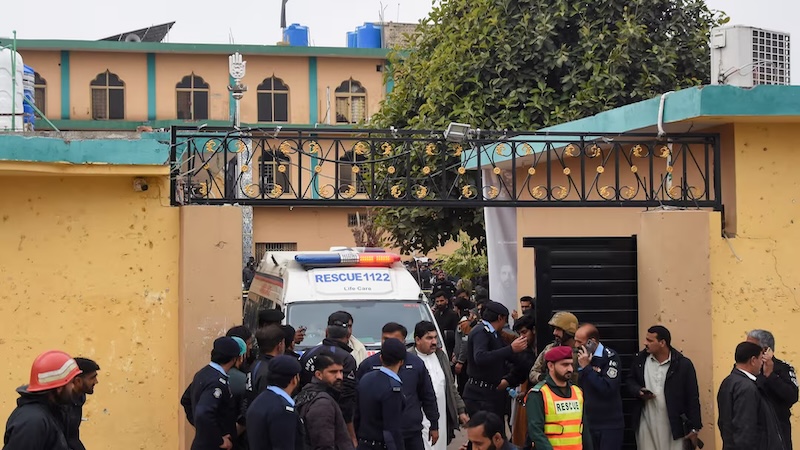
On 6 February 2026, a suicide bombing struck a Shia imambargah on Islamabad’s southeastern outskirts during Friday prayers, killing more than thirty worshippers and injuring well over a hundred. The attack shook not only the physical security of Pakistan’s capital but also the long-standing assumption that, whatever turmoil grips the country’s frontier regions, Islamabad itself remains largely insulated from sustained militant violence. That assumption now appears increasingly fragile. Attacks inside the capital are not without precedent. Pakistan has endured devastating strikes in Islamabad before, most notably the 2008 bombing of the Marriott Hotel. Yet such incidents have been infrequent in recent years, particularly when compared with the persistent violence in Khyber Pakhtunkhwa and Balochistan. The return of a mass-casualty bombing in the seat of government therefore carries symbolic weight far beyond the immediate tragedy. It suggests that militant networks, long pressured by military operations, may again be probing the country’s political center. The attacker was reportedly stopped at the entrance of the Imam Bargah Qasr-e-Khadijatul Kubra in Tarlai before detonating explosives among congregants. No group immediately claimed responsibility. Even so, suspicion naturally falls on organizations that have repeatedly targeted Shia communities in Pakistan, including Tehreek-e-Taliban Pakistan and Islamic State affiliates. The method striking worshippers in a sacred space follows a grim and familiar pattern intended to inflame sectarian tension while demonstrating the state’s inability to protect vulnerable citizens. Sectarian violence has scarred Pakistan for decades. Shia Muslims, who make up roughly 10 to 15 percent of the population, have periodically faced waves of targeted killings driven by extremist ideologies that reject religious pluralism within Islam itself. But sectarian hatred alone does not explain the timing or location of the latest attack. The broader security environment surrounding Pakistan has shifted in ways that complicate any purely domestic reading of the violence. Islamabad has increasingly argued that militant groups operating in its western provinces benefit from sanctuary and freedom of movement across the Afghan border. Reports that the Islamabad attacker had traveled repeatedly to Afghanistan will reinforce those concerns, regardless of whether definitive operational links are publicly established. The Taliban government in Kabul continues to reject Pakistani accusations that Afghan territory is being used for cross-border militancy, and relations between the two neighbors have grown visibly strained. Border tensions, diplomatic friction, and mutual distrust now define a relationship that was once described-at least rhetorically as cooperative. Since the Taliban’s return to power in 2021, Afghanistan has experienced a reduction in open warfare but not necessarily a disappearance of armed networks. Instead, a number of extremist groups appear to have adapted to the new political landscape, maintaining organizational presence even as the broader conflict environment changed. For neighboring states, the central question has never been only Afghanistan’s internal stability, but whether militant activity there can once again spill across borders. Events in Pakistan increasingly suggest that risk is no longer theoretical. Pakistan today faces multiple, overlapping security pressures. Separatist insurgents in Balochistan continue to mount deadly attacks on civilians and security personnel. In the northwest, militant violence linked to jihadist groups has resurged after several years of relative decline. Military counter-operations may disrupt individual cells or reduce immediate threats, but they struggle to deliver lasting calm when armed actors retain space to regroup beyond Pakistan’s direct reach. History offers uncomfortable reminders of how instability in Afghanistan can radiate outward. Periods of militant consolidation there have often preceded wider regional violence, affecting not only Pakistan but parts of Central and South Asia. Whether the present trajectory will follow that pattern remains uncertain, yet the warning signs are difficult to ignore. Each successful attack inside Pakistan’s major cities deepens the sense that older cycles may be re-emerging. At the same time, Pakistan’s internal challenges cannot be overlooked. Durable security depends on more than border control or military force. It also requires sustained efforts against sectarian incitement, extremist financing, and gaps in law enforcement that allow militant sympathies to persist beneath the surface. External sanctuary can intensify these problems, but it does not create them. The line between domestic weakness and regional pressure is often thinner than political narratives suggest. The bombing in Tarlai is therefore both a human tragedy and a strategic signal. Condemnations from political leaders and expressions of solidarity from abroad are necessary responses, yet they do little on their own to prevent recurrence. What would matter more is slow, difficult work: rebuilding functional diplomacy with Kabul, strengthening regional intelligence cooperation, and addressing the ideological currents that continue to make sectarian violence possible inside Pakistan. For the families who gathered for prayer that Friday, such long-term considerations offer little comfort. Their loss is immediate, personal, and irreversible. Still, the broader meaning of the attack will be shaped by what follows. If it fades into the long chronology of violence that Pakistan has endured, the strategic lessons will remain unlearned. If, instead, it prompts clearer recognition of the region’s shifting security realities, the tragedy may yet carry consequence beyond mourning. Much now depends on whether policymakers within Pakistan and across the wider region are prepared to confront those realities with honesty rather than habit. The cost of avoidance has already been measured in lives.
Articles similaires
Kabul Rejects Pakistan Claim Over Islamabad Mosque Attack
khaama.com - 06/Feb 18:46
Kabul has rejected Pakistan’s claims linking the Islamabad mosque suicide bombing to Afghanistan, calling the accusations premature and unsupported...

Pakistan: Guterres Condemns Deadly Suicide Bombing At Islamabad Mosque
eurasiareview.com - 06/Feb 23:36
By Vibhu Mishra The UN Secretary-General on Friday strongly condemned an attack on worshippers at a mosque in Pakistan’s capital, Islamabad,...
Pakistan Says Islamabad Mosque Blast Was Suicide Attack
khaama.com - 06/Feb 18:30
Pakistan says a suicide bombing at a Shia mosque in Islamabad killed dozens, as officials warn of cross-border militant links and retaliation....
Thousands mourn 32 victims of Islamabad Shia mosque bombing in Pakistan
wn.com - 09:18
Thousands of mourners in Pakistan have gathered in Islamabad to bury the victims of a suicide bombing at a Shia mosque on the outskirts of the city...
Deadly Islamabad bombing sharpens focus on cross-border attacks in Pakistan
aljazeera.com - 10:42
Analysts warn mosque attack in Pakistan could inflame sectarian fault lines in an already volatile security landscape.
IS owns up 'suicide attack' on Pakistan Shia mosque; toll now 36
times of india - 00:27
The Islamic State has claimed responsibility for a deadly blast at a Shia mosque in Islamabad, which resulted in over three dozen casualties. The...
ISIS Claims Deadly Mosque Bombing in Pakistan’s Islamabad
khaama.com - 05:21
ISIS claimed responsibility for a suicide bombing at a mosque in Islamabad as Kabul rejected Pakistan’s claims linking Afghanistan to attack. The...
Iran strongly condemns 'terrorist' mosque blast in Islamabad
wn.com - 06/Feb 15:29
Iran has strongly condemned the deadly explosion at a Shia mosque in Pakistan’s capital, Islamabad, which left more than 30 people dead and over 160...
US Issues Travel Alert After Deadly Pakistan Mosque Attack
wn.com - 10:30
The US Embassy in Islamabad has issued a security advisory for American citizens following a suicide bombing at the Imam Bargah Qasr-e-Khadijatul...
Les derniers communiqués
-
Google brings more Gemini AI features to Chrome browser
GOOGLE - 02/02/2026
-
GM Canada at the 2026 Montreal International Auto Show
General Motors - 15/01/2026
-
Bank of America Reports Fourth Quarter 2025 Financial Results
Bank of America - 15/01/2026
-
organ Stanley Capital Partners Makes Majority Investment in Olsson, Inc.
Morgan stanley - 13/01/2026
-
Cadillac Formula 1® Team Unveils Special Edition Livery for Barcelona Shakedown
General Motors - 13/01/2026
-
confidence with new 12-month/12,000 mile warranty
General Motors - 13/01/2026
-
Siemens named a leader in Green Quadrant: Quality Management Software 2025 report
SIEMENS - 12/01/2026
-
American rings in the new year with non-alcoholic IPA, new cocktails and refreshed menus in ight
AMERICAN AIRLINES - 12/01/2026
-
American Airlines partners with award-winning Pecan Lodge to serve Texas barbecue on select flights from DFW to New York airports
AMERICAN AIRLINES - 09/01/2026
-
American Airlines and OBAP celebrate 50 years of progress and 100 years of flight
AMERICAN AIRLINES - 07/01/2026