By Dr Diego Lopes da Silva, Zubaida A. Karim and Gretchen Baldwin Last week’s peace deal between the Syrian Armed Forces and the Syrian...

Vous n'êtes pas connecté
- English
- Français
- عربي
- Español
- Deutsch
- Português
- русский язык
- Català
- Italiano
- Nederlands, Vlaams
- Norsk
- فارسی
- বাংলা
- اردو
- Azərbaycan dili
- Bahasa Indonesia
- Հայերեն
- Ελληνικά
- Bosanski jezik
- українська мова
- Íslenska
- Türkmen, Түркмен
- Türkçe
- Shqip
- Eesti keel
- magyar
- Қазақ тілі
- Kalaallisut ; kalaallit oqaasii
- Lietuvių kalba
- Latviešu valoda
- македонски јазик
- Монгол
- Bahasa Melayu ; بهاس ملايو
- ဗမာစာ
- Slovenščina
- тоҷикӣ ; toğikī ; تاجیکی
- ไทย
- O'zbek ; Ўзбек ; أۇزبېك
- Tiếng Việt
- ភាសាខ្មែរ
- རྫོང་ཁ
- Soomaaliga ; af Soomaali
Rubriques :
 Maroc - EURASIAREVIEW.COM - A la une - 10/Feb 00:10
Syria: After The Earthquake
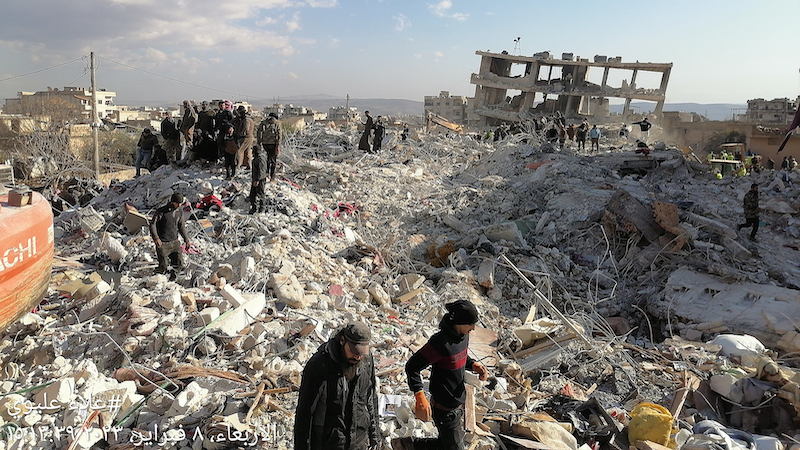
By Thanaa Jebbi Nearly three years after the devastating earthquakes of February 2023, recovery in Syria remains slow, uneven, and deeply shaped by political and structural constraints. While the disaster affected large parts of northern Syria including Jindiris, Afrin, Aleppo, Idlib, and the coastal areas, response and reconstruction pathways have diverged sharply across borders and governance contexts. In north west Syria in particular, survivors continue to live with the long-term consequences of delayed aid, limited reconstruction and prolonged displacement. Survivors have drawn stark comparisons between Syria and neighbouring Turkey, where the disaster also caused widespread death and destruction. “Almost three years after the earthquake, the Turkish government has already provided new houses for many of the affected families,” one man from Jindiris explained. “In Jindiris and across northern Syria, most people are still living in temporary shelters and camps, still waiting.” This contrast reflects not only differences in state capacity, but also the fragmented and under-resourced recovery environment in Syria, where emergency measures have gradually turned into semi-permanent living conditions. The fall of the regime of Bashar al-Assad in December 2024 reshaped Syria’s political landscape, but did not translate into immediate relief for earthquake-affected communities. According to survivors, the new interim authorities have been overwhelmed by competing priorities. “After the fall of the Assad regime, the country entered a new phase, but the authorities are overwhelmed,” the Jindiris man noted. “There are needs everywhere: the economy, international relations, security. We don’t know if rebuilding homes for earthquake survivors is even considered urgent.” In this context, earthquake recovery risks being deprioritised amid broader political and economic crises, with no clear roadmap for reconstruction, compensation, or accountability. For many women survivors, the limitations of current recovery efforts are even more stark. In Harem, a city in the Idlib governorate, a woman who lost her son during the earthquake described how material assistance alone could address the scale of loss. “One NGO helped us with a new shelter, and for that we are grateful. But I lost my son. A house does not replace a life,” she said, emphasising that what was missing was recognition and reparation. “There is no compensation, no financial support, no form of reparation that makes us feel seen.” Her testimony highlights a critical gap in Syria’s recovery process: the absence of survivor-centred approaches that acknowledge grief, loss, and long-term harm, particularly for women. At the same time, access to accurate information has remained a central challenge throughout the response. In the immediate aftermath of the earthquake, delays in cross-border aid delivery to northwest Syria, combined with misinformation and politicised narratives, had serious consequences for affected communities. Activists in north western Syria expressed frustration as aid deliveries to opposition-controlled areas were hampered by the regime’s initial refusal to open more than one checkpoint. Abd Alghani Shobak, head of the Free Aleppo Governorate Council, told IWPR at the time that that the Assad regime had blatantly exploited the catastrophe. “Although the northwestern region of Syria, which is outside its control, is the most affected by the earthquake, we saw UN and international aid reaching the airports of Damascus and Aleppo [instead],” he said. As international attention fluctuated, independent reporting and verification became essential to document needs, expose access barriers, and counter disinformation surrounding humanitarian assistance, particularly narratives that obscured the impact of border closures and attempts to control aid flows into non-regime areas. Three years on, Syria’s earthquake survivors remain caught between unfinished recovery and an uncertain political transition. Their testimonies underline a simple truth: rebuilding is not only about infrastructure. It is about dignity, recognition, accountability, and ensuring that those most affected, especially women and displaced communities, are neither forgotten nor silenced as the country moves into its next phase. As Syria navigates a complex post-Assad transition, ensuring that earthquake survivors remain visible and heard will be essential to any credible vision of recovery. About the author: Thanaa Jebbi is Syria Programme Manager for IWPR Source: This article was published by IWPR
Articles similaires

How an Assad-era law is threatening civil society groups in Syria
An old law from Syria's dictatorship is making life tough for human rights and aid organizations there. Is the Syrian interim government holding onto...
How an Assad-era law is threatening civil society groups in Syria
An old law from Syria's dictatorship is making life tough for human rights and aid organizations there. Is the Syrian interim government holding onto...
Cutting Through the Fog of War (and Peace) in Syria
wn.com - 11/Feb 05:23
Clear-eyed recounting and a detailed roadmap can give U.S. officials and the American public a better view of what security and governance measures...

The ISIS Prisoner Dilemma – OpEd
eurasiareview.com - 06/Feb 17:18
The first week of 2026 witnessed a significant turnaround in US policy in the Middle East. A key factor was the visit of Syria’s interim...
Syria’s foreign minister, Iraq’s Kurdish region president discuss reconstruction, economy
wn.com - 14/Feb 18:11
ISTANBUL Syria’s Foreign Minister Asaad al-Shaibani on Saturday met with Nechirvan Barzani, the president of Iraq’s northern Kurdish...
Syria’s foreign minister, Iraq’s Kurdish region president discuss reconstruction, economy
wn.com - 14/Feb 18:11
ISTANBUL Syria’s Foreign Minister Asaad al-Shaibani on Saturday met with Nechirvan Barzani, the president of Iraq’s northern Kurdish...
A Kurdish-majority neighborhood in Syria recovers from clashes with hope for the future
wn.com - 15/Feb 05:44
A month after violent clashes in a Kurdish-majority neighborhood in Syria's Aleppo, tens of...
A Kurdish-majority neighborhood in Syria recovers from clashes with hope for the future
wn.com - 15/Feb 05:44
A month after violent clashes in a Kurdish-majority neighborhood in Syria's Aleppo, tens of...
Syria, Saudi Arabia ink mega investment deals in push for reconstruction after years of war
wn.com - 07/Feb 16:00
The deals follow Syria's hosting of the signing of a memorandum of understanding between Chevron and a Qatar-based company to pursue offshore oil and...
Les derniers communiqués
-
Meta begins construction of $10-billion data centre in Indiana
Meta - 12/02/2026
-
Google brings more Gemini AI features to Chrome browser
GOOGLE - 02/02/2026
-
GM Canada at the 2026 Montreal International Auto Show
General Motors - 15/01/2026
-
Bank of America Reports Fourth Quarter 2025 Financial Results
Bank of America - 15/01/2026
-
organ Stanley Capital Partners Makes Majority Investment in Olsson, Inc.
Morgan stanley - 13/01/2026
-
Cadillac Formula 1® Team Unveils Special Edition Livery for Barcelona Shakedown
General Motors - 13/01/2026
-
confidence with new 12-month/12,000 mile warranty
General Motors - 13/01/2026
-
Siemens named a leader in Green Quadrant: Quality Management Software 2025 report
SIEMENS - 12/01/2026
-
American rings in the new year with non-alcoholic IPA, new cocktails and refreshed menus in ight
AMERICAN AIRLINES - 12/01/2026
-
American Airlines partners with award-winning Pecan Lodge to serve Texas barbecue on select flights from DFW to New York airports
AMERICAN AIRLINES - 09/01/2026