As the people of Thailand go to the polls this February, voters are offered three competing visions of progress: one that builds power from the...

Vous n'êtes pas connecté
- English
- Français
- عربي
- Español
- Deutsch
- Português
- русский язык
- Català
- Italiano
- Nederlands, Vlaams
- Norsk
- فارسی
- বাংলা
- اردو
- Azərbaycan dili
- Bahasa Indonesia
- Հայերեն
- Ελληνικά
- Bosanski jezik
- українська мова
- Íslenska
- Türkmen, Түркмен
- Türkçe
- Shqip
- Eesti keel
- magyar
- Қазақ тілі
- Kalaallisut ; kalaallit oqaasii
- Lietuvių kalba
- Latviešu valoda
- македонски јазик
- Монгол
- Bahasa Melayu ; بهاس ملايو
- ဗမာစာ
- Slovenščina
- тоҷикӣ ; toğikī ; تاجیکی
- ไทย
- O'zbek ; Ўзбек ; أۇزبېك
- Tiếng Việt
- ភាសាខ្មែរ
- རྫོང་ཁ
- Soomaaliga ; af Soomaali
Rubriques :
 Maroc - EURASIAREVIEW.COM - A la une - 10/Feb 17:44
Elections In Thailand: More Of The Same? – OpEd
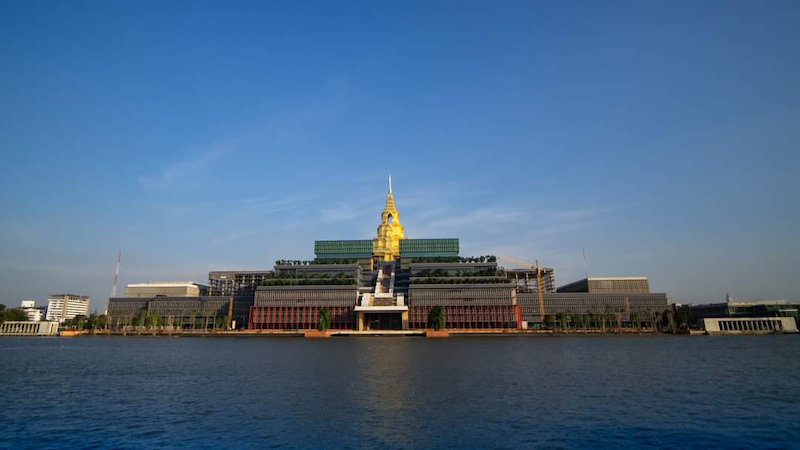
During early general elections on Sunday, February 8, 2026, Thai voters elected a new 500-seat House of Representatives and voted in a national referendum on drafting a new constitution to replace the military-backed 2017 constitution. Approximately 60 political parties participated in these elections. Four hundred of the 500 seats are allocated according to the majority system, while the remaining 100 seats are allocated based on each party's share of the national vote. The elections, which can be seen as a three-way contest between competing visions of progressive, populist, and old-fashioned clientelist politics, took place during a tense period, in which the border conflict with Cambodia fueled nationalist sentiments, and accusations of corruption and complicity of Thai politicians in the further expansion of scam centers on the borders with Cambodia and Myanmar caused sensation and discussion, especially on social media. For an interesting overview, see the Insight documentary from the Singapore-based English-language Asian news network CNA Mediacorp. Voter turnout was high, with nearly 52 million registered voters. Furthermore, the country has had three prime ministers in just two years, contributing to the sense of urgency. On August 29, 2025, Thai Prime Minister Paetongtarn Shinawatra was removed from office by the Constitutional Court due to her controversial involvement in a phone call with the de-facto leader of Cambodia, Hun Sen. Amidst military confrontations and tensions at the border between the two countries, Paetongtarn was criticized for being too submissive by calling Hun Sen "uncle" and even undermining Thailand with remarks that directly labeled the Thai army general as an individual "on the other side" of the conflict. The election results surprised some observers. Pre-election polls had indicated a stronger showing for progressive groups. Instead, voters gave a clear victory to conservative, establishment-friendly parties that emphasized nationalism, stability, patriotism, and support for the monarchy. For many voters, maintaining the status quo seemed safer amidst security concerns, income inequality, economic problems, and political divisions at home. As the BBC’s Jonathan Head observed: “At the national level the People's Party, with nearly 10 million votes, did much better in the party list than Bhumjaithai, with just under six million votes, although this was still a big drop compared to the more than 14 million Move Forward, the previous incarnation of the People's Party, won in 2023”. Nevertheless, the general election placed the Bhumjaithai party, led by Prime Minister Anutin Charnvirakul, 59, comfortably in the lead. With approximately 95% of the votes counted by early February 9, Bhumjaithai had won 194 seats in the 500-member House of Representatives. This is a significant improvement over previous results, as the party only came in third place in the last election in 2023 with 71 out of 500 parliamentary seats. However, it is not enough for a majority, as 251 seats are needed to form a government without coalition partners. Anutin declared victory on election night, saying the victory belonged to "all Thais." He based his campaign on unity, the protection of Thai sovereignty, and the concept of "Thai identity," specifically nation, religion, and monarchy. After all, Bhumjaithai stands for "Thai pride." Support for that message grew during the border conflict with Cambodia, which played a major role in the final weeks of the campaign. The border conflicts with Cambodia allowed Anutin to re-establish himself as a wartime leader, after his popularity had initially declined due to floods and financial scandals. His campaign focused on national security and economic stimulus. Thai Pride Anutin's rise reflects years of strategic maneuvering by Bhumjaithai, a party originating from the northeastern province of Buriram, adjecent to Cambodja. The party's patriarch, Newin Chidchob, was once an ally of former Prime Minister Thaksin, until a break with him in 2008 marked a turning point in Bhumjaithai's rise, transforming the party from a regional power player into a national force. Anutin, known by the nickname "Noo" – Thai for mouse – embodies the party's ideological flexibility. He has served in multiple governments and held some of the most powerful ministerial positions. As Minister of Public Health, he oversaw the decriminalization of cannabis in Thailand and led the country's response to COVID-19. Later, as Minister of the Interior, he exerted considerable influence over provincial and local appointments, steadily accumulating political power. Central to Bhumjaithai's current strategy is the recruitment of influential local political families. Bhumjaithai has several influential figures – so-called "big houses" – in its ranks. One of the most prominent is Varawut Silpa-archa, a former minister and son of the late Prime Minister Banharn Silpa-archa, who, along with 11 other incumbent members of parliament from his family's party, joined Bhumjaithai. With these additions, the party is better positioned than ever to offer a comprehensive policy platform, according to Varawut. Bhumjaithai's campaign combines the local influence of its parliamentary candidates with an attractive national welfare and economic agenda. Anutin relies on a team of technocratic ministers managing the finance, trade, and foreign affairs portfolios, in an attempt to carry the momentum of his young term in office into the elections. In addition, there is also the nationalist element in the campaign. Bhumjaithai, seen as the most likely party to form the next government, thus benefited from an electoral strategy that utilizes old-fashioned clientelism and a party machine skilled in organizing voters at the local level in the vote-rich northeast. Popular with young people The progressive ‘orange’ People's Party, led by Natthaphong Ruengpanyawut (after former prime ministerial candidate and leader of Move Forward, Pita Limjaroenrat, was banned from politics for ten years), finished second with 116 seats. The result fell short of expectations, after polls had suggested they could take the lead. Ruengpanyawut acknowledged the defeat and pointed to the public's shift towards conservative politics and promises of stability. Economic pressures, including high household debt and headwinds in global trade, drove some voters towards parties that promised more stable governance and offered opportunistic incentives such as financial assistance. The People's Party remains popular among many urban and young voters. Their program continues to promise far-reaching reforms of the military, police, and judiciary, appealing to these young and urban voters. However, legal constraints have led them to abandon demands for reform of a law that imposes harsh penalties for criticism of the monarchy (Lèse-majesté 112), while now placing more emphasis on economic issues. Softening its political stances threatens to weaken its core support base, which was already under pressure because the party had clearly positioned itself in the previous election as an alternative to nine years of military-led government, a position it could not capitalize on this time. Furthermore, now that the military's reputation has been boosted by the wave of patriotism that arose during the border conflicts with Cambodia, its positions critical of the military could become a political liability. Past glory? In third place was the Pheu Thai party with 62 seats. The party remains connected to the Shinawatra network and former Prime Minister Thaksin Shinawatra, who remains influential despite his imprisonment. Thaksin's political dynasty has dominated Thai politics for more than two decades. Shinawatra's party built on the populist policies developed by its predecessor, the Thai Rak Thai party, which was in power from 2001 to 2006 until it was overthrown by a military coup. Before the 2023 elections, the party moderated its policies sufficiently to return to power, after being considered an acceptable alternative to the more progressive Move Forward party by the previously hostile royalist military establishment. However, the conservative legal system still turned against the party – two of its prime ministers were removed from office within two years, and Thaksin was sentenced to prison based on old lèse-majesté charges from 2005. Following the removal of two prime ministers, the once dominant Pheu Thai party was heading towards one of its weakest election results in decades. The lower number of seats indicated a division within the pro-Shinawatra camp and less unity among supporters than in previous elections. Smaller parties and independent candidates won the remaining seats. The Kla Tham party obtained 56 seats (and the conservative-liberal Democratic Party only nine). The main advisor of the Kla Tham party is the former Deputy Minister of Agriculture, Thammanat Prompao. Thammanat is a highly controversial figure, who was convicted and imprisoned in Australia in 1994 for drug trafficking. He has always denied this conviction, claiming it was ‘flour’ and not heroin. Early figures from the election commission showed that Bhumjaithai performed well in areas where messages about national security and traditional values resonated most. No single party obtained a majority. Given Bhumjaithai's lead, the party has become the clear favorite to form the next government, most likely through a coalition with smaller conservative or centrist parties. It all now hinges on the numbers, as crucial negotiations will take place behind closed doors between the main political players. Parties agreeing to join the coalition will demand to lead some of the prominent and budgetarily important ministries, such as the portfolios of Interior, Finance, and Agriculture. Scam Centers Thailand has long struggled with significant problems in combating cyber fraud, particularly centers linked to transnational criminal organizations operating from neighboring Myanmar and Cambodia. These cyber scam centers operate in Thailand as part of a larger network of transnational criminal organizations that exploit weak law enforcement and regulations. Despite attempts to stop these activities, such as cutting off utilities and rescuing victims, the adaptability of these networks remains a significant challenge. Furthermore, these centers often operate under the guise of legitimate businesses but are primarily focused on defrauding people worldwide. The US Treasury Department has imposed sanctions on networks involved in these scams, highlighting the significant financial losses suffered by victims, particularly Americans. To evade detection, these centers frequently move across borders and employ tactics such as human trafficking and financial fraud to sustain their operations and maximize profits. The long-term consequences of cyber fraud for the Thai economy and security include significant financial losses, estimated at over 100 billion baht, and a potential erosion of public trust in digital systems. Moreover, the persistent threat of cybercrime can destabilize regional security and complicate diplomatic relations, particularly with neighboring countries involved in cross-border fraud. A campaign, initiated under Prime Minister Paetongtarn Shinawatra and continued under Prime Minister Anutin Charnvirakul, attempted to tackle the top of the scam centers. The crackdown, while popular, placed significant political pressure on Anutin's minority government. The opposition Pheu Thai party seized on the issue and filed a motion of no confidence on December 12, 2025, specifically targeting the government's handling of illegal money flows and fraud. The Nation observed that “the controversy was exacerbated by allegations linking politicians and officials to the illegal business world. Public concern persisted regarding prominent names, including the case of former Deputy Finance Minister Vorapak Tanyawong, who resigned due to ties with a Cambodian business group. Furthermore, revelations about "politician Ch.", allegedly linked to the Klatham party, led by Deputy Prime Minister Thammanat Prompao, further tarnished Anutin's government.” The mystery deepened with photos of the scam suspect alongside prominent Thai politicians, including Prime Minister Anutin, Finance Minister Ekniti, and former army chief Apirat. Thailand seized more than $300 million in a new crackdown on international criminals allegedly laundering money through two banks in Bangkok, originating from online scam centers in neighboring Cambodia and Myanmar. "The accounts at Bangkok Bank and Kasikornbank belonged to Cambodian businessman Yim Leak," the Bangkok Post reported on December 4. However, the main suspects are still at large. "The people involved are all scammers. Three or four of those arrested are key players," Prime Minister Anutin announced on December 3 after a nationwide investigation. "The seized or frozen assets amount to more than 10 billion baht (US$312.5 million)," Anutin said, without naming the arrested individuals. They were charged with "conspiracy, leading a criminal organization, fraud, and money laundering," according to a summary of the police report. Pressure on Thailand to take action against scammers has increased after at least two Thais died in Poipet, a Cambodian border town notorious for alleged illegal scam centers. Their bodies showed bruises, possibly from torture, after they failed to scam enough victims, according to investigators. According to the Bangkok Post, Thailand urgently needs to adapt to a new political reality. "We must not forget that the ongoing conflict is between the two governments, and not between the people of the two countries." Public support for a new constitution In addition to the elections, a referendum was also held asking: "Do you support a new constitution?" Voters could choose between "Yes," "No," or "No opinion." This is only the first step, because according to the rules of the Constitutional Court, the process requires more referendums, including one on how the constitution would be drafted and another for final approval. That timeline could extend over several years. The proposal was adopted by a large majority (65% yes, 34% no). Yes voters hope that the process can reduce the power of unelected bodies, including the military-appointed Senate and parts of the judiciary. Conservative voices, however, warned that rapid changes could lead to instability. A parliament led by conservatives will likely shape the drafting process and may delay or limit major changes. Therefore, the divided outcome of the two votes is striking: many people support conservative governance in parliament, while at the same time favoring long-term constitutional reforms. The problems with the democratic system have therefore not disappeared. Many voters seem open to structural changes, but perhaps not at the pace that some progressive groups desire. What may have been the deciding factor for Anutin and his Bhumjaithai party can be traced back to three factors: his strong stance against Cambodia during the ongoing border conflict between the two countries, the accession of a number of technocrats to his party (including some 'defectors' from Pheu Thai), and his ability to convince voters that he will have competent ministers to address the country's long-standing challenges in areas such as the economy, trade, and education. According to the Straits Times, the party has succeeded in "cultivating a conservative image based on stability, positioning itself as a bulwark against forces that are portrayed as excessively disruptive to the existing political and institutional order." The Thai stock market index already rose by more than 3% on Monday.
Articles similaires
Red, Orange, and Reaction: Thailand’s Electoral Crossroads
wn.com - 18/Feb 19:38
As the people of Thailand go to the polls this February, voters are offered three competing visions of progress: one that builds power from the...
Cambodia deports over 48,000 in expanding crackdown on online scam networks
wn.com - 20/Feb 19:25
Cambodia has deported more than 48,000 foreign nationals accused of involvement in online scam operations since August 2023, marking one of the most...
Cambodia deports over 48,000 in expanding crackdown on online scam networks
wn.com - 20/Feb 19:25
Cambodia has deported more than 48,000 foreign nationals accused of involvement in online scam operations since August 2023, marking one of the most...
Bangladesh poll result reflects public rejection of governance failures, not party loyalties: Analyst
wn.com - 18/Feb 22:05
By Mohammad Ali Haqshenas The result of the parliamentary election in Bangladesh was driven less by ideology and more by a popular rejection of...
Bangladesh poll result reflects public rejection of governance failures, not party loyalties: Analyst
wn.com - 18/Feb 22:05
By Mohammad Ali Haqshenas The result of the parliamentary election in Bangladesh was driven less by ideology and more by a popular rejection of...
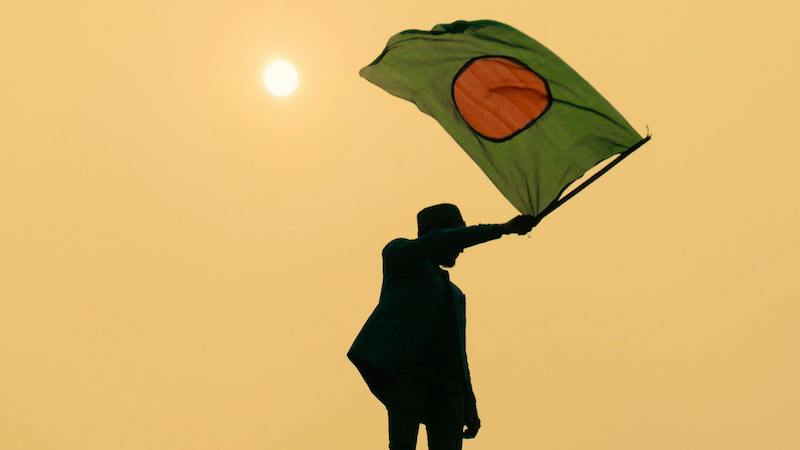
Bangladesh’s 2026 Elections Indicate A Ceiling For Islamic Politics – Analysis
eurasiareview.com - 21/Feb 01:26
The Jamaat-i-Islami's 77 seats mark an expansion of the Islamic constituency in the Muslim-majority country, but they also indicate its...

Starmer Is Learning The Lessons Of Politics The Hard Way – OpEd
eurasiareview.com - 15/Feb 00:48
By Yossi Mekelberg Few could have foreseen that merely 17 months after Keir Starmer led the Labour Party to victory in the UK general election,...
Starmer Is Learning The Lessons Of Politics The Hard Way – OpEd
eurasiareview.com - 15/Feb 00:48
By Yossi Mekelberg Few could have foreseen that merely 17 months after Keir Starmer led the Labour Party to victory in the UK general election,...
Bangladesh Nationalist Party secures victory in general election
wn.com - 14/Feb 01:37
The Bangladesh Nationalist Party (BNP) has secured a victory in the general election, which was held 18 months after prolonged political unrest ousted...
Les derniers communiqués
-
Boeing and Sun PhuQuoc Airways Announce Order for Up to 40 787 Dreamliner Jets
Boeing - 18/02/2026
-
Vietnam Airlines Finalizes Order for 50 Boeing 737 MAX Airplanes
Boeing - 18/02/2026
-
Air Astana Finalizes Order For Up to 15 Boeing 787 Dreamliner Jets
Boeing - 17/02/2026
-
McDonald’s Canada Reimagines Breakfast with the New Breakfast Poutine in Atlantic Canada
MC DONALD'S - 17/02/2026
-
Statement on Starliner Crewed Flight Test Investigation Report
Boeing - 17/02/2026
-
Meta begins construction of $10-billion data centre in Indiana
Meta - 12/02/2026
-
Last 787-8 test airplane bows out after years of breakthroughs
Boeing - 10/02/2026
-
Boeing Flight Deck Modernization Keeps C-17A Mission Ready
Boeing - 09/02/2026
-
ANA receives Boeing’s 100th 787 Landing Gear Exchange Delivery
Boeing - 04/02/2026
-
Boeing announces largest-ever Landing Gear Exchange agreement at Singapore Airshow
Boeing - 04/02/2026