The time of “soft calculations” has passed. The European Union is now shifting to a strategy of maximum pressure on the aggressor’s economy....

Vous n'êtes pas connecté
- English
- Français
- عربي
- Español
- Deutsch
- Português
- русский язык
- Català
- Italiano
- Nederlands, Vlaams
- Norsk
- فارسی
- বাংলা
- اردو
- Azərbaycan dili
- Bahasa Indonesia
- Հայերեն
- Ελληνικά
- Bosanski jezik
- українська мова
- Íslenska
- Türkmen, Түркмен
- Türkçe
- Shqip
- Eesti keel
- magyar
- Қазақ тілі
- Kalaallisut ; kalaallit oqaasii
- Lietuvių kalba
- Latviešu valoda
- македонски јазик
- Монгол
- Bahasa Melayu ; بهاس ملايو
- ဗမာစာ
- Slovenščina
- тоҷикӣ ; toğikī ; تاجیکی
- ไทย
- O'zbek ; Ўзбек ; أۇزبېك
- Tiếng Việt
- ភាសាខ្មែរ
- རྫོང་ཁ
- Soomaaliga ; af Soomaali
Rubriques :
 Maroc - ENG.UATV.UA - A La Une - 03/Mar 10:00
Russia cannot fight forever, – Interview with Ben Hodges

Are Russia's resources truly limitless? In a new UATV interview, retired US Army officer Ben Hodges analyzes the current frontline situation and answers the toughest questions: when Moscow will start looking for a way out of the war and what real indicators show readiness for negotiations. The main focus of the conversation is Ukraine's path to victory, which lies in destroying Russia’s ability to export energy resources. We also discussed why the Middle East war demonstrates Russia's weakness, and whether the Kremlin will dare direct invasion of the Baltic states. — Every year we hear the same question over and over again: will this year be the last? And in one of your recent interviews, you said that Russia is not interested in ending the war soon. What concrete battlefield or political indicators should our viewers anticipate to know when Moscow is actually ready to negotiate? — I think that the Kremlin will continue doing this as long as they think they have a chance to win, which means that Ukraine collapses or that support for Ukraine in Europe collapses. As long as they believe that outside pressure will force Ukraine to take a bad deal, I think they will continue. So the thing I would be looking for is indicators that the Europeans, for example, are going to continue to support Ukraine. Unfortunately, I don’t think my own country under the current administration is going to do much to help, which I think is a terrible mistake on our part. But that’s how I see it. In fact, I’m sure the Russians do not have the ability to overwhelm or break through Ukrainian defenses. So the situation on the ground today will look a lot like this a year from now, because Ukraine also does not have the ability by itself to push Russia out. I imagine that the Russians will continue their attacks on Ukrainian civilian targets and infrastructure, unless and until Ukraine is able to make that infeasible for them by increasing air defense capabilities and also destroying the places and the factories from which those Russian attacks are happening. And then finally, I do think that Ukraine has identified a path to victory, which is the destruction of Russia’s ability to export oil and gas. So, in addition to knocking out their refineries, seeing — with help from the Europeans — the stopping of shadow fleet vessels from taking oil out through the Baltic Sea and the Black Sea, those would be very positive indicators. — Do you think that Russians currently heavily rely on external pressure on Ukraine? — Well, they assume that the US president is going to keep doing that. I mean, it’s been difficult for me to watch, and I’m sure it must be agonizing for Ukrainians to see this: that an American president has, by and large, taken the Russian perspective and approach on all of this. Even though most of Congress and most of America supports Ukraine, that could change. But I don’t see any indicators right now that it’s going to change — that the US is going to change its approach. — Russian forces are reportedly losing thousands of troops per mile in some sectors in Ukraine. Does that signal strategic failure, or does it actually show that Russia can sustain attritional warfare longer than the West expected? — There is a theory about attrition warfare that says the Russians can do this forever because they have such a big country and they don’t care about casualties, and that’s the way it’s always been for them. So there is a theory that says they can do this indefinitely. I don’t think so. I don’t know where that tipping point is, but at some place — both physically and psychologically — Ukraine is killing more Russians than Russia is able to take into the armed forces. So it’s not an endless amount of manpower. That’s why they’re using North Koreans, immigrants, everybody they can find. I don’t think they have really recruited too heavily from Moscow or St. Petersburg yet. If they become very desperate, then we may see a broader mobilization. But based on the last few months, and some battlefield adaptations that the Ukrainian side has made, I think it is feasible that Ukraine could kill more Russians than the Russians can bring in as replacements. And of course, having bodies does not equal having an effective force. They have to be trained, equipped, organized, etc. I don’t know how effective that is at this point, but I imagine what’s going on now on the ground is going to continue throughout the rest of this year and on into next year unless something significant happens externally. — Speaking of mobilization, do you think there is a chance of a new mobilization in Russia? Are there indicators? — Of course there’s a chance. I think the Kremlin has wanted to avoid this because it would be obvious that even after four years of large-scale invasion and twelve years since the original invasion, they have been unsuccessful. That would be difficult to explain. And I think that even Putin has to be conscious of and respond to some public opinions and sentiment. But at some point they’ll have to make a judgment. As long as they are able to make enough money from the sale of oil and gas to China, India, and other customers, I think they will continue to do what they’re doing. — The latest peace talks between the US, Ukraine, and Russia in Geneva unfortunately produced no meaningful results. Are negotiations now just strategic theater for domestic audiences? What does it look like to you? — On the Russian side, it’s just theater. I’ve seen zero indication — as an outsider watching — that they are serious about getting to a just, sustainable peace that is acceptable to Ukraine. I have not seen any indicators that the Russians are prepared to back away from their demands that have been there from the beginning. Now, of course, the Ukrainian negotiation team and Ukrainian leadership will have a better sense of this than I would. So I would trust their judgment. But I don’t see any indicator that Russia is genuinely interested in getting to a peaceful conclusion, because they still think the US is not going to intervene in a meaningful way against Russia, and they are skeptical that Europe is prepared to do whatever is necessary to help Ukraine. So they’ll continue this theater. On the Ukrainian side, I can only guess. I can understand why there would be a desire to stay involved in hopes that the Trump administration will change its approach or at least continue to provide certain things. Although now, given the amount of weapons being used against Iran, I don’t know how much — like Patriot, for example — is available for the US to sell to European allies to give to Ukraine. So that leverage, I don’t know how significant it is. — Does a Middle East war weaken Western focus on Ukraine? And if so, how crucial is that for Ukraine? — It certainly is going to divert some energy — intellectual energy, perhaps some intelligence capabilities — and, as we just discussed, perhaps fewer preferred munitions being available to sell to European allies to give to Ukraine. On the other hand, this is demonstrating that Russia is unable to help another of their allies. They did nothing to help Armenia. They did nothing to help Syria. They’ve done nothing now to help Iran. And I think it’s because they are so stretched against Ukraine. In my view, it disproves the idea that Russian victory is inevitable. I’m sure it’s not inevitable, and most Ukrainians believe that as well. Other European countries are not convinced by the justification given by the Trump administration for why they attacked Iran. You don’t see British, German, Polish, Italian, or others involved in the actual operations — except that the Iranians have hit Cyprus now, and I imagine that sites like Akrotiri and others could be struck if Iran were able to. So it's not like there is no effect, but I don’t see this as a significant distraction preventing Europe from doing what it was already doing for Ukraine. — Several intelligence agencies predicted that Russia could invade Europe before the end of the decade. Yet Russia is heavily involved in the war against Ukraine and also stockpiling weaponry and expanding bases along NATO borders. What are the chances of Russia having a significant or even partially successful invasion of any European country? — The best way to make sure Russia never attacks the rest of Europe is to make sure that Ukraine is successful against Russia. Ukraine, as a European country, is on the front line, and Russia — after 12 years — still controls only 21% of Ukraine. I think you cannot discount the possibility that Russia would seek to do something elsewhere to distract or disrupt Europe’s support for Ukraine. These gray zone operations are intended to put pressure on governments by scaring populations. It seems unlikely that Russia could or would attack another European country while they are struggling against Ukraine. But I wouldn’t rule it out. The most likely scenario would be one or two years after some kind of outcome in Ukraine — that’s the earliest they might be prepared to do something. And of course, an attack on Lithuania or Latvia or Estonia would be aimed at breaking NATO, not taking over Europe — to demonstrate that the alliance is unwilling to come to the aid of, say, Latvia if Russia attacked around Daugavpils. These are the kinds of scenarios the alliance is preparing for. And I wouldn’t rule it out. But most experts agree: helping Ukraine defeat Russia is the best investment for European security. — If Europe doesn’t dramatically expand defense production now, are we watching the slow collapse of deterrence? Does deterrence work at all today? — If you don’t have ammunition and capability, then you don’t have deterrence. The theory of deterrence is based on capability that is demonstrated — and willpower to use that capability that is also demonstrated. The Russians have to believe that the alliance has that capability and is prepared to use it. The fact that so many people question whether the United States would actually respond is a problem, because that could lead to a terrible miscalculation by Russia. I absolutely believe the United States would respond. It’s in our own interest, not just a treaty obligation. So deterrence does work — but only if you have demonstrated capability and will. — You warned that Moscow is already waging hybrid war against the West, and the most dangerous thing is that we cannot respond using conventional warfare. At what point does hybrid aggression legally become war? And do you see it happening anywhere in Europe? — The whole purpose of what I call gray zone operations — some call it hybrid, but gray zone is more useful — is to achieve effects like scaring populations, disrupting communications and financial systems, disrupting or destroying critical infrastructure. And they are done in a gray area, meaning it is difficult to confirm who did it. Anybody serious knows Russia is behind most of these things, but you don’t see Russian soldiers or people waving Russian flags. They use criminals or proxies to create these effects. Until Western countries figure out how to protect airspace, infrastructure, and populations in this kind of gray zone, the Russians will continue. We have to figure out how to inflict consequences on Russia. Governments have been reluctant because they treat these like criminal investigations — you gather evidence, determine guilt, then act. That will never work. Instead, you should start seizing shadow fleet vessels, for example. Every time drones shut down an airport, there should be a consequence of some sort. Shooting down drones over Copenhagen or Berlin or Munich airports won’t solve the problem. There needs to be a more robust approach to determine origin and then inflict consequences. And the consequences might not be directly related to the specific act Russia carried out. The Russians have to know that we know. That will take political courage — and leaders explaining to populations what is happening and what will be done to protect them. — Considering the growing cyber warfare of recent years and cases of hybrid warfare across Europe — would you say we are already in the early stages of World War III without admitting it? — You could say that, but I don’t know if it helps strategic thinking. What I care about is not the label, but: What are we doing about it? What are our objectives? Our priorities? Our risks? Politicians like categories — “Second Cold War,” “World War III,” etc. If it helps explain things to populations, fine. But I don’t know that labeling it helps. This is why I’ve tried to advocate for people accepting that Russia is at war with us — even if it’s not Kinzhal missiles or Shahed drones flying into Rotterdam or Gdańsk. They are using all their tools to disrupt and distract us. https://www.youtube.com/watch?v=WzA7sJLA4zk Read also: “The coalition of the willing” must enter Ukraine now – there is no time for hesitation, – Interview with Kurt Volker The post Russia cannot fight forever, – Interview with Ben Hodges appeared first on Freedom.
Articles similaires

The EU Will Not Make Unilateral Concessions for the Sake of a Fake Peace: Interview with Kaja Kallas
eng.uatv.ua - 24/Feb 15:05
The time of “soft calculations” has passed. The European Union is now shifting to a strategy of maximum pressure on the aggressor’s economy....

“The position of both leaders is basically that of petty blackmailers” – Interview with Georgy Chizhov
eng.uatv.ua - 04/Mar 10:38
We interviewed political analyst Georgy Chizhov and analyzed the positions of Hungary and Slovakia's leadership toward Ukraine. Georgy believes...
“The position of both leaders is basically that of petty blackmailers” – Interview with Georgy Chizhov
eng.uatv.ua - 04/Mar 10:38
We interviewed political analyst Georgy Chizhov and analyzed the positions of Hungary and Slovakia's leadership toward Ukraine. Georgy believes...

Trump’s Positions Weaken Over Epstein Files – Interview with Glen Grant
eng.uatv.ua - 22/Feb 16:00
Today we are joined by retired British Army Lieutenant Colonel Glen Grant. We discuss the potential fallout from the Epstein files scandal for US...

“The coalition of the willing” must enter Ukraine now – there is no time for hesitation, – Interview with Kurt Volker
eng.uatv.ua - 01/Mar 10:12
An exclusive interview with Kurt Volker on the new security architecture of 2026. The experienced diplomat criticizes Western hesitation and...

Putin Has Already Started World War III and Will Not Stop at the War with Ukraine — Zelenskyy
eng.uatv.ua - 23/Feb 08:49
Russian dictator Vladimir Putin has already started World War III, and the only response should be strong military and economic pressure to force...

'I don't have the yips': Trump says he's considering boots on the ground in Iran
rawstory.com - 02/Mar 16:34
President Donald Trump hasn't ruled out sending U.S. ground forces into Iran as part of Operation Epic Fury.The 79-year-old president ordered joint...
'I don't have the yips': Trump says he's considering boots on the ground in Iran
rawstory.com - 02/Mar 16:34
President Donald Trump hasn't ruled out sending U.S. ground forces into Iran as part of Operation Epic Fury.The 79-year-old president ordered joint...
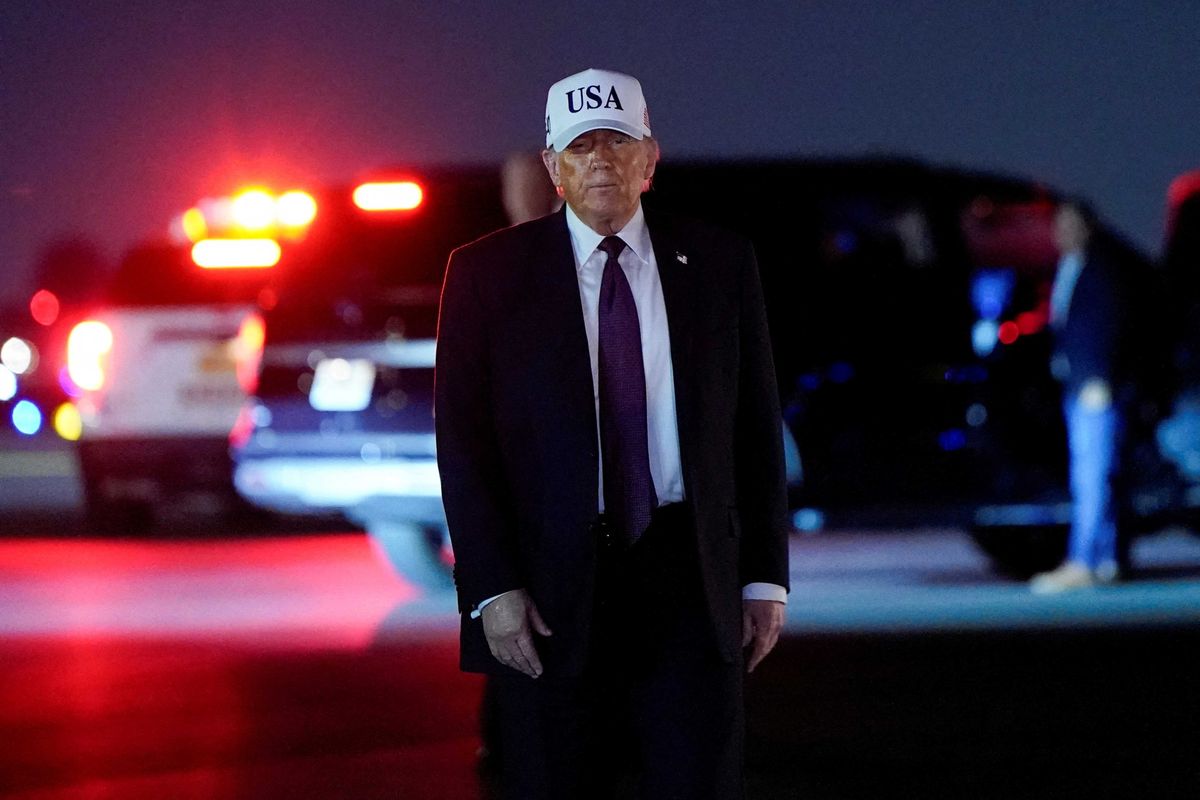
Maddow warns MAGA axed team in charge of thwarting Iranian assassins — over a Trump grudge
rawstory.com - 03/Mar 02:50
Iran will almost certainly be out for blood now that U.S. and Israeli forces took out Supreme Leader Ali Khamenei, MS NOW's Rachel Maddow said on...
Les derniers communiqués
-
Aucun élément