A climate-resilient rice production initiative has trained 160 lead farmers, nearly half of them women, across four districts in Ghana, equipping them...

Vous n'êtes pas connecté
- English
- Français
- عربي
- Español
- Deutsch
- Português
- русский язык
- Català
- Italiano
- Nederlands, Vlaams
- Norsk
- فارسی
- বাংলা
- اردو
- Azərbaycan dili
- Bahasa Indonesia
- Հայերեն
- Ελληνικά
- Bosanski jezik
- українська мова
- Íslenska
- Türkmen, Түркмен
- Türkçe
- Shqip
- Eesti keel
- magyar
- Қазақ тілі
- Kalaallisut ; kalaallit oqaasii
- Lietuvių kalba
- Latviešu valoda
- македонски јазик
- Монгол
- Bahasa Melayu ; بهاس ملايو
- ဗမာစာ
- Slovenščina
- тоҷикӣ ; toğikī ; تاجیکی
- ไทย
- O'zbek ; Ўзбек ; أۇزبېك
- Tiếng Việt
- ភាសាខ្មែរ
- རྫོང་ཁ
- Soomaaliga ; af Soomaali
Rubriques :
 Maroc - TAIWANTODAY.TW - Taiwan Review - 01/Feb 00:00
Cultivating Friendship
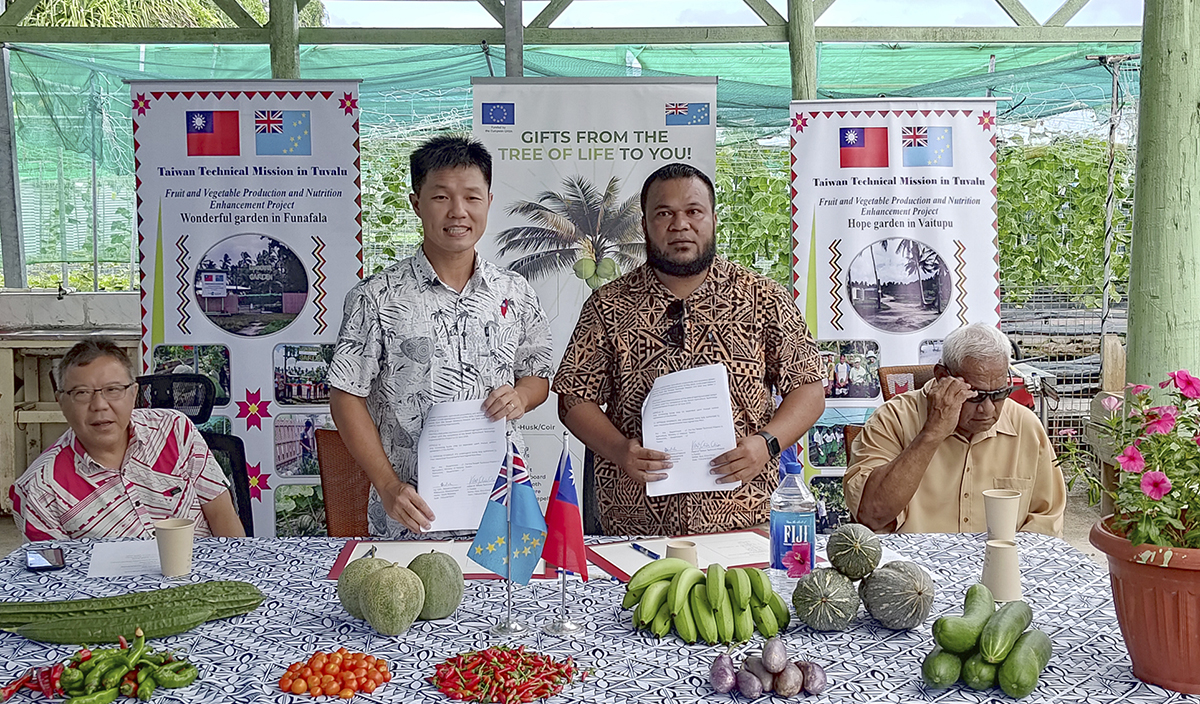
The 30-year-old TaiwanICDF leverages technology to give other nations the means to achieve food security. Taiwan is committed to facilitating the agricultural development of its allies and other like-minded countries, an aspiration underscored last November at the third edition of the Development Focus Forum in Taipei City. Organized by the government-supported Taiwan International Cooperation and Development Fund (TaiwanICDF), the event has taken place every three months since May 2025, with the latest iteration centering on smart agriculture. Taiwanese and international experts gathered for the event with a focus on overseas projects implemented by the fund. Speakers and panelists shared how smart agriculture can reshape the sector, and TaiwanICDF explained how its Taiwan Technical Missions (TTM) use smart solutions to facilitate transformation in agriculture abroad. Deputy Secretary General Hsieh Pei-fen (謝佩芬) said the forum offers diverse perspectives that provide new focal points for future TaiwanICDF international aid projects. Taiwan has a long history of providing agricultural assistance overseas, in areas spanning crop production, pig farming and aquaculture. In 1959 the government sent a group of 11 agricultural specialists to South Vietnam, marking the beginning of the nation’s overseas aid in food production. In 1961 Taiwan launched Operation Vanguard, a project that sent an agricultural technical mission to Liberia. The endeavor, the first of its kind in Africa, was a success and subsequently replicated in 10 other countries on the continent over the next three years. The first such mission from Taiwan to Latin America arrived in the Dominican Republic in 1964. Founded in 1996, TaiwanICDF is the nation’s foremost foreign aid organization offering assistance in various areas including agriculture. Projects implemented by the fund send specialists to partner nations, offer training sessions in Taiwan and carry out lending and investment plans. To date Taiwan has helped over 80 countries further develop their agriculture, and currently TaiwanICDF has TTMs on the ground in 21 countries including Saudi Arabia, Tanzania and Thailand. The organization’s statistics from 2022 indicated that its agricultural projects created 15,000 jobs that year. Food Security The main goal of TaiwanICDF’s current agricultural work is to ensure food security and meet basic human needs in partner countries in line with the United Nations’ Sustainable Development Goal 2, which aims to end hunger and improve nutrition. In Caribbean ally Haiti, where rice is a staple food, various production enhancement projects, such as training Haitian technical staff in Taiwan, applying effective irrigation system maintenance and, most importantly, producing high-quality, high-yield rice strains, have been implemented across the nation over the past 12 years. Statistics show that farms with TTM input produced more than 2,100 tons of resilient seed rice harvested across 618 hectares of paddies last year.TaiwanICDF works with European Union funding and the Tuvalu government to undertake agricultural projects in the nation. (Photo Courtesy of TaiwanICDF)Diversifying diets for residents in the Marshall Islands, Palau and Tuvalu is a priority as they are nations on the front line of climate change, affected by issues such as highly saline water, which impairs vegetable and fruit production. This challenge results in a high ratio of expensive imported produce and poor health outcomes due to diet imbalances, including frequent incidence of chronic illness like diabetes and heart disease. Taiwan missions offered technical help in addressing the issues through low-water vegetable and fruit farms in schools and communities, with the fresh produce used for student lunches, in addition to undertaking nutrition education and cooking classes based around fresh vegetables. The Enhancing Nutrition Balance Through Agricultural Production Project was initiated by the TTM in 2021 and will run until 2029. Seedlings and cultivation methods from Taiwan have enabled locals to grow food in their yards, improving general health and even resulting in sales of surplus produce. Vegetables grown in Palau with assistance from TaiwanICDF are provided to athletes at the 2025 Pacific Mini Games hosted by the island nation. (Photo Courtesy of TaiwanICDF)Vegetables grown at the Princess Margaret Hospital in Tuvalu through Taiwan Technical Team assistance reduce reliance on imports and offer better nutrition to patients. (Photo Courtesy of TaiwanICDF)The Princess Margaret Hospital in Funafuti, Tuvalu, is a TTM success story for its creation of a farm on the premises in 2020 that provides a stable supply of vegetables to its patients. Several other such farms were developed around the country with help from the TTM, with such strong results that in 2025 the EU decided to work with the mission to upgrade Tuvalu’s agriculture: EU funding and advanced Taiwanese technology worked in tandem to establish a vertical hydroponic pipe system, a smart irrigation network and an egg production facility. A new composting shed forms part of an agricultural value chain established in ally St. Lucia. (Photo Courtesy of TaiwanICDF)Valued Networks For decades TaiwanICDF has introduced agricultural techniques proven effective at home to partner countries, Hsieh noted, but in recent years it has become increasingly involved in establishing agricultural value chains as well. “In order to improve financial returns on agricultural products, we now help with post-harvest processing, packaging, logistics and marketing,” she explained. Hsieh cited a project that enhances the efficiency of the production-distribution fruit and vegetable supply chain in Taiwan ally St. Lucia. Previously farmers were constrained by only selling produce at traditional markets, while supermarkets and hotels imported their fresh food requirements, a substantial volume in a nation with a large and valuable tourism industry. The TTM aimed to incorporate local vegetable and fruit growers into high-end buyers’ supply chains to achieve a degree of import substitution. Implemented from 2018 to 2026 in two phases, the mission shared cultivation technology, provided training on the use of small farm machinery, advised on packaging techniques and helped analyze market demand for produce. The mission also organized processing, marketing, traceability systems and good agricultural practice workshops to ensure both sustainable and safe produce. It arranged farm visits by supermarket and hotel representatives as well as negotiations between sellers and buyers. The project achieved an increase in the share of domestically grown vegetables and fruit at supermarkets and in hotels in St. Lucia by the end of its first phase in 2021. (Photo Courtesy of TaiwanICDF)TTMs develop firm foundations for food security through pig farming in ally Kingdom of Eswatini and aquaculture in ally Republic of Paraguay (Photo Courtesy of TaiwanICDF)Improved Resilience Climate change is a challenge facing food producers worldwide and TaiwanICDF works hard to offer solutions. In Somaliland, which is affected by water shortages, TaiwanICDF has introduced drip irrigation systems, an efficient method that delivers water slowly and directly to plant roots via a network of pipes to minimize evaporation. TaiwanICDF is working with the International Rice Research Institute headquartered in the Philippines on low-carbon emission cultivation in major rice-growing nations in Southeast Asia. Such methods include alternative wetting and drying. Traditional Southeast Asian farming practices use electric pumps to flood rice paddies all year round, consuming fossil fuel and leading to the growth of methane-producing organisms and additional carbon dioxide. The alternative method helps cut emissions by using less water, pumping for shorter periods and creating an environment less favorable to methane. Farmers are also dissuaded from burning off rice straw left after harvest to reduce the amount of carbon and other pollutants released into the air. They are now advised to cut the straw and leave it to decay in the fields or to collect and use the straw.Officials from the Philippines stop for a photo during an inspection tour around Taiwan facilities focusing on climate resilience in the agricultural sector. (Photo Courtesy of TaiwanICDF)In the Philippines, which historically suffers from typhoons, rainfall is becoming more frequent and severe with climate change. In 2021 the TTM advised on construction of steel structure greenhouses, advanced net shelters and newly designed irrigation systems at a demonstration site opened in mid-December 2023 in Luzon Island’s Tarlac province. The protective measures proved effective in the face of severe weather, significantly reducing crop losses directly caused by heavy rainfall and inhibiting the growth of pests induced by high moisture combined with high temperatures. “This is the best Christmas gift from Taiwan to the people of Tarlac,” said then-governor Susan Yap. The climate event-resistant solution, combined with a smart farming Internet of Things and automated equipment, raised producers’ incomes by at least 15 percent and is being replicated at three clusters in central Luzon. “Taiwan’s mature techniques and cutting-edge information and communications technology are valuable diplomatic assets,” Hsieh noted. “The solid technical strengths Taiwan leverages in development projects create positive relations with allies and like-minded countries. The TTMs embody how Taiwan implements values-based diplomacy and assumes a responsible role in the global community, where Taiwan both helps and leads.”A Somaliland farmer tends crops watered by a drip irrigation system introduced by TaiwanICDF to the drought-prone country. (Photo Courtesy of TaiwanICDF)Write to Oscar Chung at mhchung@mofa.gov.tw
Articles similaires

Aiyedatiwa Launches Hi-tech Farm Projects Today
newslineng.com.ng - 05/Feb 07:12
Today marks a significant milestone in Ondo State’s journey toward agricultural transformation and economic growth as we gather for the...
99 Egyptian companies showcase agricultural exports at Fruit Logistica 2026 in Berlin
dailynewsegypt.com - 16:29
Ninety-nine Egyptian companies specialising in agricultural produce participated in Fruit Logistica 2026, the world’s leading trade fair for fresh...
Increasing Pesticide Toxicity Threatens UN Goal Of Global Biodiversity Protection By 2030
eurasiareview.com - 05/Feb 23:08
At the 15th UN Biodiversity Conference (COP15) in Montreal, Canada, in 2022, nations committed to reducing the risks associated with pesticide use...
Jamaica unveils landmark Essex Valley Agro-Processing Facility with CDB and UK support
caribbeannewsglobal.com - 06/Feb 15:38
ST ELIZABETH, Jamaica – The Government of Jamaica has marked a major milestone in the transformation of its agriculture sector with the official...
Ghana aims for food self-sufficiency - Govt, World Bank back Food Security Resilience Programme
wn.com - 03/Feb 11:55
The Minister of Finance, Dr Cassiel Ato Forson, has stated that the country has the natural resources and capacity to feed itself with the right...
Guyana to explore reliable markets for rice in Mexico, Europe
guyanachronicle.com - 29/Jan 09:20
THE government of Guyana in 2026 will explore new markets with Mexico and Europe to export rice. According to Agriculture Minister Zulfikar...
Barbados to provide 100 Acres of land for Youth Agri-Production
caribbeannewsglobal.com - 04/Feb 23:42
By Julie Carrington BRIDGETOWN, Barbados, (GIS) – The government of Barbados will be providing 100 acres of land to the youth of this country to...
Barbados to provide 100 Acres of land for Youth Agri-Production
caribbeannewsglobal.com - 04/Feb 23:42
By Julie Carrington BRIDGETOWN, Barbados, (GIS) – The government of Barbados will be providing 100 acres of land to the youth of this country to...
Fast Forward
taiwantoday.tw - 01/Feb 00:00
As Taiwan’s high-speed rail system approaches its 20th anniversary, it serves as an international model. Upgrading rail services in Taiwan has...
Les derniers communiqués
-
COMPUTEX 2025: MiTAC Powers Sustainable AI Data Centers with New Server & Cooling Tech
MiTAC Computing Technology Corp - 24/05/2025